The first quarter of 2026 delivered a shock to energy markets that few analysts predicted. Crude oil prices
plummeted by 35% between January and March, sending ripples through global economies and leaving consumers,
producers, and investors scrambling to understand what happened. Brent crude, the international benchmark, fell from
$92 per barrel in early January to just $60 by late March. West Texas Intermediate (WTI) followed a similar
trajectory, dropping from $88 to $57 per barrel. This dramatic decline marks one of the steepest quarterly drops
since the pandemic-era crash of 2020, and its causes reveal fundamental shifts in the global energy landscape that
will shape markets for years to come.
The Perfect Storm That Crashed Oil Prices
No single factor explains the 35% price collapse. Instead, a combination of supply surprises, demand
disappointments, and market dynamics converged to create what traders called a “perfect storm” for crude oil. Each
factor alone might have pushed prices down modestly. Together, they triggered a cascade that overwhelmed the
market’s ability to stabilize.
The oversupply problem emerged faster than anyone anticipated. OPEC+ production cuts that had supported prices
throughout 2025 began unraveling in December when several member nations started exceeding their quotas. By
February, the group was producing an estimated 1.2 million barrels per day above agreed limits. Meanwhile, non-OPEC
production surged, particularly from Brazil and Guyana, adding another 800,000 barrels per day to global supply.
Demand Growth That Never Materialized
Perhaps more significant than the supply increase was the demand disappointment. Projections for 2026 oil demand had
assumed continued growth from China and other developing economies. Those projections proved wildly optimistic.
China’s economic slowdown, which intensified in late 2025, reduced its crude imports by nearly 12% compared to the
previous year. India’s demand growth also stalled as the country accelerated its transition to electric vehicles and
natural gas.
The developed world offered no rescue. European economies contracted slightly in Q1 2026, reducing fuel consumption.
American gasoline demand, while stable, showed none of the growth that would have absorbed the extra supply. The
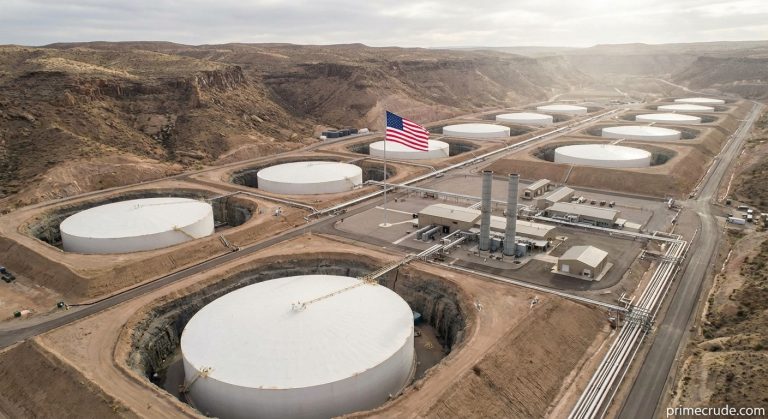
result was global inventories building at the fastest rate since 2020, with storage tanks filling across every major
trading hub.
OPEC’s Response and the Production Dilemma
The Organization of the Petroleum Exporting Countries faced an impossible choice as prices collapsed. Emergency
meetings in February failed to produce agreement on deeper production cuts. Saudi Arabia, the group’s de facto
leader, pushed for a 2 million barrel per day reduction. But several members, including Iraq and the United Arab
Emirates, resisted cuts that would slash their revenue during an already difficult period.
The group’s cohesion, already strained by years of production disputes, fractured further. Some analysts suggested
that Saudi Arabia’s insistence on compliance was less about stabilizing prices and more about disciplining members
who had chronically exceeded quotas. Whatever the motivation, the result was paralysis. By early March, OPEC+ had
announced only modest cuts that markets deemed insufficient.
The Russian Factor
Russia’s role in the price collapse deserves special attention. Western sanctions had long complicated Russia’s oil
exports, but workarounds through trading intermediaries kept Russian crude flowing to global markets. In early 2026,
these flows increased substantially as Russia sought to maximize revenue despite the lower prices. Russian crude,
often sold at significant discounts to benchmark prices, undercut competitors and added to the supply glut.
European countries that had pledged to reduce Russian energy dependence found themselves importing Russian crude
through less direct channels. The practical reality of energy markets proved more flexible than political
declarations. This Russian supply, estimated at 500,000 barrels per day above late-2025 levels, contributed
meaningfully to the oversupply problem.
American Shale Producers React to the Crash
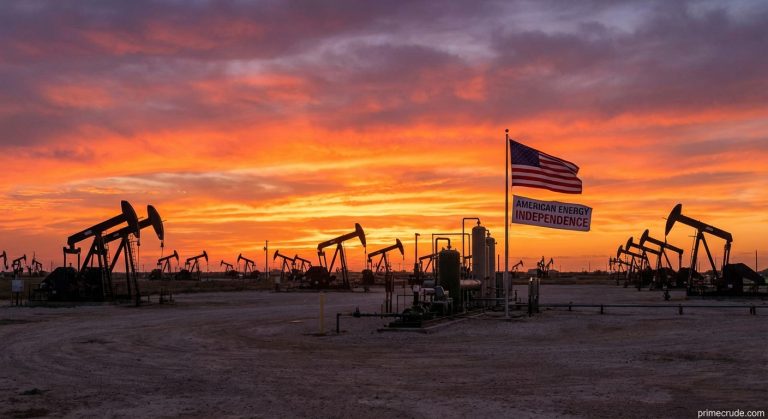
The U.S. shale oil industry, which had learned hard lessons from previous price crashes, responded to the Q1 decline
with remarkable speed. Operators across the Permian Basin, Eagle Ford, and Bakken formations began slowing drilling
activity within weeks of the price collapse. Rig counts, which had climbed steadily through 2025, reversed course
and fell by nearly 15% between January and March.
This rapid response reflected the industry’s evolution since the 2014-2016 downturn. Companies had reduced debt,
improved efficiency, and built more flexibility into their capital programs. Many operators could remain profitable
at $55 per barrel, but profitability and growth are different objectives. At $57 WTI, expansion made little sense,
and most producers shifted to maintenance mode.
Financial Discipline Takes Hold
Wall Street’s changed attitude toward shale companies reinforced the production pullback. Investors who once
rewarded growth above all else now demanded cash returns and capital discipline. Energy stocks, which had finally
outperformed the broader market in 2024-2025, faced renewed selling pressure as oil prices fell. Management teams
had strong incentives to protect profitability rather than chase production targets.
The result was a supply response that should help rebalance markets over time. U.S. production growth projections
for 2026 were slashed from 500,000 barrels per day to essentially flat. Some forecasters even predicted slight
declines if prices remained depressed through the summer.
Consumer Impact Across Different Sectors
For ordinary consumers, the oil price crash delivered welcome relief at the gas station. American gasoline prices,
which had averaged $3.45 per gallon in late 2025, dropped below $2.80 by late March. Diesel prices fell even more
sharply, reducing costs for trucking companies, farmers, and other fuel-intensive businesses.
Heating oil customers in the Northeast, still burning fuel in March, saw their costs drop significantly compared to
the winter months. Airlines began reducing fuel surcharges, though fare reductions were slow to materialize as
carriers used the savings to shore up profitability rather than cut prices.
The Double-Edged Sword for Producing Regions
Not everyone celebrated cheaper oil. States dependent on oil and gas revenues faced immediate budget pressures.
Texas, which collects significant severance taxes on oil production, projected revenue shortfalls for the second
half of 2026. New Mexico, even more dependent on oil revenue, announced hiring freezes and delayed infrastructure
projects.
Employment in the oil patch showed early signs of strain. While major producers avoided layoffs, service companies
that provide drilling, completion, and maintenance services began reducing headcount. Hotel occupancy in
Midland-Odessa, a bellwether for Permian Basin activity, dropped 20% from January to March.
What the Futures Markets Are Signaling
Sophisticated traders make their living predicting where oil prices are headed. Their collective bets, visible in
futures markets, offer clues about expected price trajectories. As of late March 2026, futures curves showed modest
backwardation, meaning prices for future delivery were slightly lower than current prices. This structure typically
indicates that traders expect supply-demand conditions to tighten.
December 2026 futures traded around $65 per barrel for Brent and $62 for WTI, suggesting markets anticipated a
partial recovery but not a return to the $90+ levels seen in early January. Options markets told a similar story,
with the most active trading concentrated in the $55-$75 range.
Positioning Among Major Players
Hedge fund positioning, tracked through regulatory filings, showed interesting patterns. Net long positions in crude
oil futures, which had been elevated entering 2026, unwound dramatically during February and March. Many speculative
traders moved to neutral or even slightly short positions, betting that prices would remain depressed or fall
further.
Commercial hedgers, including oil producers and refiners, displayed different behavior. Producers increased their
hedge positions at the lower prices, locking in revenues for future production. Refiners reduced hedges, expecting
their input costs to remain manageable. These patterns suggested that industry insiders expected prices to stabilize
rather than collapse further.
Geopolitical Wildcards That Could Shift the Balance
Oil prices never stay low forever, and geopolitical events historically trigger some of the sharpest price spikes.
Several simmering situations could rapidly change the supply picture and send prices higher.
Middle East tensions, always a factor in oil markets, showed no signs of resolution. The strait of Hormuz, through
which roughly 20% of global oil supply passes, remained a potential chokepoint. Any serious threat to tanker traffic
would immediately add a risk premium to crude prices.
Venezuela’s Uncertain Future
Venezuela, sitting atop some of the world’s largest crude reserves, presents both risk and opportunity. Political
instability and years of underinvestment have reduced Venezuelan production to a fraction of its potential. Any
opening that allowed foreign investment and technology could add substantial supply over time. Conversely, further
deterioration could remove even current production from the market.
Libya offers similar uncertainty. Production there swings wildly depending on internal politics and security
conditions. The country had been producing near capacity entering 2026, but history suggests disruptions are always
possible.
The Energy Transition Factor
Longer-term oil demand faces structural challenges from the global energy transition. Electric vehicle sales
continue growing rapidly, particularly in China and Europe. Each electric car on the road displaces roughly 15-20
barrels of oil demand per year. With EV sales projected to exceed 20 million units globally in 2026, the cumulative
impact on oil demand is becoming significant.
Renewable energy expansion also indirectly affects oil demand by reducing the need for oil-fired power generation.
While oil generates only a small fraction of global electricity, that marginal demand matters in a market where
relatively small supply-demand imbalances drive large price moves.
Peak Demand Debates Intensify
The Q1 2026 price crash reinvigorated debates about peak oil demand. Some analysts argue that global oil demand may
have already plateaued, with the weak demand in early 2026 representing a structural shift rather than a cyclical
weakness. Others counter that developing economy growth will sustain oil demand for decades, even as developed
nations reduce consumption.
The truth likely lies somewhere between these extremes. Oil demand may not collapse, but growth rates are slowing.
Investment in new production capacity, particularly expensive offshore and Arctic projects, faces heightened
skepticism when long-term demand remains uncertain.
Refining Sector Implications
Refiners, who convert crude oil into usable products, experienced mixed impacts from the price crash. Lower crude
costs reduced their input expenses, but they faced pressure to pass savings along to customers. Refining margins,
the spread between crude costs and product prices, compressed during Q1 2026 as product prices fell alongside crude.
Regional differences mattered significantly. Asian refiners benefited from their ability to access discounted Middle
Eastern and Russian crude. European refiners, still adjusting to post-Russian supply chains, faced tighter margins.
American Gulf Coast refiners occupied a middle position, with access to cheap domestic crude but competition from
imported products.
Capacity Utilization and Maintenance Decisions
With margins under pressure, some refiners accelerated scheduled maintenance, taking capacity offline during a
period of lower profitability. This decision, replicated across multiple facilities, had the effect of reducing
product supply and providing some support to crack spreads. It also positioned those refiners for higher utilization
when margins improved.
The refining sector’s structural challenges, including aging facilities and the transition away from gasoline toward
jet fuel and petrochemicals, continued regardless of short-term price movements. Several European refineries
announced accelerated closure timelines, citing the difficulty of competing in a lower-margin environment.
What Major Forecasters Predict for the Rest of 2026
The International Energy Agency, OPEC, and major bank analysts have revised their 2026 oil price forecasts
substantially since the Q1 crash. Their projections, while varying in details, cluster around a few common themes.
Most forecasters expect prices to recover modestly during the second half of 2026. The IEA projects Brent averaging
$68 per barrel for the full year, implying significant recovery from Q1 lows. OPEC’s internal projections, leaked to
media, suggest the group expects $72 average prices if production discipline improves.
Bank Analyst Perspectives
Major investment banks offer a range of views. Goldman Sachs, historically bullish on commodities, forecasts Brent
at $75 by December 2026, citing expected supply cuts and demand recovery in China. JPMorgan takes a more bearish
stance, projecting $65 Brent by year end, arguing that structural demand weakness will persist.
Morgan Stanley has emphasized the uncertainty range, noting that $50-$85 prices are all plausible depending on how
key factors evolve. This wide range reflects the genuine difficulty of forecasting oil prices even a few months
ahead.
Investment Implications for Energy Stocks
The oil price crash hammered energy stock valuations. The S&P 500 Energy Sector fell 22% during Q1 2026, erasing
much of the gains from the previous two years. Integrated majors like ExxonMobil and Chevron declined somewhat less
than pure-play exploration and production companies, reflecting their diversified business models and refining
operations.
Service companies bore the brunt of the selloff. Halliburton and Schlumberger saw their shares drop over 30% as
investors anticipated reduced drilling activity and pricing pressure. Offshore drillers, already struggling with
oversupply in their sector, faced renewed existential questions about their business models.
Dividend Sustainability Questions
Investors who bought energy stocks for their generous dividends faced uncomfortable questions. Most major producers
had maintained dividend payments through previous downturns, but current payout ratios assumed significantly higher
oil prices. If sub-$60 prices persisted for multiple quarters, dividend cuts would become likely for some companies.
The market’s pricing of energy stocks in late March suggested serious skepticism about near-term recovery.
Price-to-earnings multiples compressed to levels that implied either significantly lower earnings or an expectation
of price recovery. Value investors were beginning to accumulate positions, betting on the latter.
Lessons from Previous Oil Price Crashes
History offers context for understanding the Q1 2026 crash and anticipating what might come next. Previous crashes
in 2008, 2014-2016, and 2020 each had different causes but shared some common patterns in their aftermath.
In each case, supply eventually adjusted. Marginal producers cut back, investment in new capacity declined, and
natural field decline reduced production from existing wells. This supply response typically took 12-18 months to
fully materialize, suggesting that any recovery in 2026 might be gradual.
Demand Recovery Patterns
Demand responses varied more across episodes. The 2008 crash accompanied a global recession, and demand took years
to fully recover. The 2020 pandemic crash saw rapid demand recovery once restrictions lifted. The 2014-2016
experience showed how resilient demand can be when economic growth continues despite lower prices.
The 2026 situation appears closer to 2014-2016 than to 2008 or 2020. The global economy, while slowing, has not
entered recession. Demand weakness reflects structural factors and specific regional problems rather than a broad
collapse in economic activity.
Preparing for Different Price Scenarios
Given the uncertainty about oil’s direction, both consumers and investors should consider how different scenarios
would affect their situations. A sustained recovery to $80+ would benefit producing regions and energy investments
but strain consumer budgets. Continued low prices would provide consumer relief but stress the oil industry and
related employment.
Hedging strategies are available for those with significant oil exposure. Airlines and other major fuel consumers
routinely hedge their fuel costs, and individual investors can express views through commodity ETFs or options
strategies. Understanding these tools, even if not using them, helps in thinking through the implications of
different outcomes.
Long-Term Portfolio Considerations
The energy sector’s weight in major stock indices has declined dramatically over the past decade, reflecting both
lower valuations and the growth of technology companies. Whether this decline continues or reverses depends heavily
on the oil price outlook. Those constructing long-term portfolios must form views on energy’s role in a
transitioning world.
Some investors are selecting specific energy companies positioned to survive and potentially thrive regardless of
oil prices. These “quality” names typically have low production costs, strong balance sheets, and diversified
operations. Others are avoiding the sector entirely, believing that the energy transition makes oil equities
fundamentally unattractive.
Conclusion
The 35% oil price crash of Q1 2026 resulted from a convergence of supply growth, demand disappointment, and market
dynamics that overwhelmed stabilization mechanisms. While painful for producers and energy-dependent regions, the
decline provided relief to consumers and fuel-intensive businesses. Looking ahead, most analysts expect gradual
price recovery as supply cuts take effect and demand stabilizes, but significant uncertainty remains.
The episode reinforces fundamental truths about oil markets. Prices are inherently volatile, driven by factors
ranging from OPEC politics to economic growth to geopolitical events. Short-term forecasting is difficult even for
experts, and surprises in both directions are common. The energy transition adds a new dimension of long-term
uncertainty that previous generations of oil traders never faced.
Whether you’re a consumer enjoying lower gasoline prices, an investor reassessing energy allocations, or simply
curious about one of the world’s most important commodities, understanding the forces behind the Q1 2026 crash
provides valuable context for whatever comes next in this perpetually turbulent market.
The oil market’s only certainty is its uncertainty. Those who understand the forces shaping prices are better
equipped to respond to whatever direction the market takes next.
About the Author