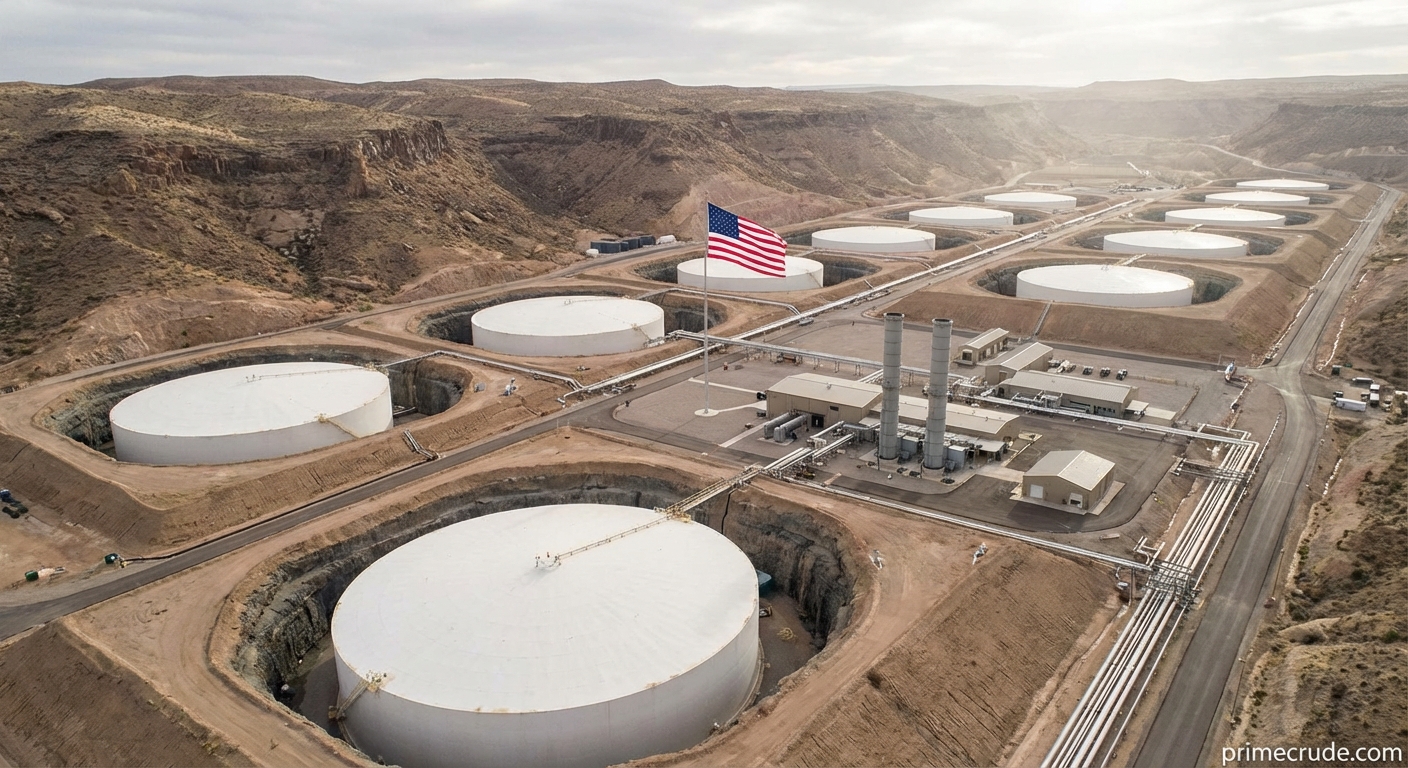
Deep within salt caverns along the U.S. Gulf Coast, compressed underground in facilities scattered across Europe and
Asia, nations store vast quantities of crude oil for emergencies that may never come. These strategic petroleum
reserves represent enormous financial commitments, tying up billions of dollars in oil that simply sits in storage
rather than fueling vehicles or heating homes. Why do governments maintain these expensive insurance policies? The
answer lies in the traumatic history of oil supply disruptions, the economics of energy security, and the
geopolitical realities that make reliable petroleum access a matter of national security.
The Birth of Strategic Stockpiling
Strategic petroleum reserves emerged from the oil crises of the 1970s. Before the 1973 Arab oil embargo, developed
nations took energy supply for granted. Oil flowed freely from the Middle East at low prices, and few policymakers
worried about disruptions. The embargo shattered that complacency, demonstrating that oil-exporting nations could
weaponize petroleum supply for political purposes.
The shock was profound. Gasoline lines formed in the United States and Europe. Rationing was implemented in some
countries. Economic damage extended far beyond inconvenience at the pump, triggering the worst recession since World
War II. Political leaders recognized that their nations were dangerously vulnerable to disruptions they couldn’t
control.
Creating the Modern SPR System
In response to the 1973 crisis, the International Energy Agency (IEA) was established in 1974 with a core mandate:
ensuring member countries maintained adequate petroleum reserves. The IEA set a target of 90 days of import
coverage, meaning reserves should cover at least three months of petroleum imports. This requirement remains the
foundation of strategic stockpiling policy today.
The United States created its Strategic Petroleum Reserve (SPR) through the Energy Policy and Conservation Act of
1975. Over the following decade, the U.S. filled a network of salt cavern storage sites capable of holding over 700
million barrels. This massive undertaking created the world’s largest government petroleum stockpile, a distinction
the U.S. SPR retains today.
How the U.S. Strategic Petroleum Reserve Works
America’s SPR is stored in four main sites along the Gulf Coast in Texas and Louisiana. These locations use enormous
underground salt caverns, dissolved from solid salt deposits by water injection. The caverns are natural storage
vessels, impermeable to oil and enormously cost-effective compared to above-ground tanks.
A single salt cavern can hold 10-20 million barrels of crude oil, roughly equivalent to 400-800 million gallons. The
combined storage capacity of all SPR sites approaches 800 million barrels, though current inventory is substantially
lower following releases in recent years. Filling the SPR at its maximum capacity would require crude oil worth
roughly $50-60 billion at typical prices.
Filling and Releasing Mechanisms
Adding oil to the SPR typically occurs when prices are relatively low and conditions favor building inventory. The
government contracts with crude suppliers or accepts royalty oil from federal leases. Physical delivery occurs via
pipeline from Gulf Coast ports and refineries to the storage sites.
Releasing oil requires authorization, either through a presidential order for emergency drawdowns or through
congressionally mandated sales. Once authorized, releases can begin within days. Maximum drawdown capability
approaches 4.4 million barrels per day, though sustained releases at this rate would exhaust the reserve in months.
SPR Releases in Action
The U.S. has released SPR oil on several occasions, each illustrating different approaches to reserve utilization.
The largest releases historically have been coordinated international responses to actual or threatened supply
disruptions. Smaller releases have addressed domestic price spikes or simply generated federal revenue.
During the 1991 Gulf War, the U.S. released crude oil to counter potential supply disruptions from Iraqi attacks on
Kuwaiti and Saudi oil facilities. The IEA coordinated similar releases from member nation reserves. The combination
of SPR releases and the relatively limited scale of actual supply disruption prevented severe price spikes.
The 2022 Historic Release
The largest SPR drawdown in history occurred in 2022 following Russia’s invasion of Ukraine. The administration
authorized release of 180 million barrels over six months, averaging one million barrels per day. Combined with
releases from other IEA members, this action aimed to moderate oil price spikes caused by sanctions on Russian oil.
The 2022 release was controversial. Critics argued it depleted the reserve for price management rather than genuine
supply emergencies. Supporters countered that moderating price impacts of geopolitical disruptions falls within the
reserve’s core purpose. The debate highlighted unresolved questions about appropriate use of strategic stockpiles.
International Strategic Reserve Systems
While the U.S. maintains the world’s largest government-owned reserve, other nations have developed their own
stockpiling arrangements. The 31 IEA member countries collectively maintain reserves equivalent to roughly 1.5
billion barrels. Japan, South Korea, and European nations hold substantial government reserves. China has built an
increasingly large stockpile outside the IEA framework.
Japan’s strategic reserve is particularly notable given that country’s near-complete dependence on imported
petroleum. Japanese reserves include both government-owned stockpiles and mandated industry inventory. Combined
reserves cover over 200 days of imports, more than double the IEA minimum requirement.
China’s Growing Stockpile
China, not an IEA member, has aggressively built strategic reserves since the early 2000s. The exact size remains
officially undisclosed, but estimates suggest capacity exceeding 500 million barrels with actual inventory somewhat
lower. China has used periods of low oil prices to fill these reserves, opportunistically buying cheap crude.
Chinese purchases have at times significantly influenced global markets. During the 2020 price crash, massive
Chinese buying absorbed excess supply and supported prices. This purchasing power gives China leverage in energy
markets that complements its strategic reserve holdings.
The Economics of Strategic Stockpiling
Maintaining strategic reserves involves substantial costs beyond the value of stored oil. Storage facilities require
maintenance and security. Oil in storage must be periodically rotated to maintain quality. Opportunity costs arise
from having billions of dollars tied up in inventory rather than invested productively.
Salt cavern storage, as used for the U.S. SPR, offers the lowest cost option. Construction and maintenance costs
work out to roughly $3-4 per barrel of capacity. Above-ground storage in tank farms costs substantially more.
Countries lacking suitable geology for cavern storage must accept higher storage expenses.
Cost-Benefit Considerations
Evaluating strategic reserves requires comparison with the potential economic damage from supply disruptions. A
severe oil crisis lasting several months could cost an importing economy hundreds of billions of dollars in lost
output, higher costs, and associated damage. Against this potential loss, reserve maintenance costs appear modest.
However, the probability-weighted calculation is less clearly favorable. Severe disruptions are rare. Most reserve
inventory never gets used. The insurance analogy is apt: strategic reserves are expensive insurance policies against
low-probability but high-impact events.
Reserve Quality and Composition
Not all crude oil is interchangeable, which complicates reserve management. The U.S. SPR contains a mix of sweet
(low sulfur) and sour (high sulfur) grades. Domestic refineries have varying preferences and capabilities. A release
that provides the wrong crude grades for available refining capacity delivers less actual supply relief.
Strategic planners must balance multiple considerations when choosing what crude to store. Light, sweet crudes are
most valuable and versatile but cost more to acquire. Heavy, sour crudes cost less but require specialized refining
capacity. The optimal mix depends on the domestic refining configuration and likely emergency scenarios.
The Aging Infrastructure Challenge
Decades of operation have degraded SPR infrastructure. Salt cavern walls develop surface instabilities. Pipelines
corrode. Pumping equipment ages. Maintaining full operational capability requires ongoing investment that
governments sometimes defer.
Recent assessments of the U.S. SPR found significant infrastructure issues requiring billions in repairs and
upgrades. Maximum drawdown capability has declined from theoretical maximums due to equipment limitations. Restoring
full functionality while the reserve remains partially filled presents engineering challenges.
Debate Over Optimal Reserve Levels
How much oil should nations stockpile? The IEA’s 90-day import coverage standard dates from the 1970s when oil
dependence patterns differed. Some argue changed circumstances, including increased domestic production, reduced
import dependence, and evolved market mechanisms, justify lower reserve requirements.
Others counter that new vulnerabilities have emerged. Cyberattacks could disable infrastructure more suddenly than
traditional supply disruptions. Geopolitical tensions have intensified. Climate events increasingly threaten energy
infrastructure. These new risks might justify higher rather than lower reserves.
The U.S. Reserve Level Controversy
Congressional mandated sales and emergency releases have substantially reduced U.S. SPR inventory. From over 700
million barrels at its peak, the reserve fell to roughly 350 million barrels by early 2025. At typical import and
consumption rates, this represents less than 20 days of total U.S. petroleum consumption.
Critics argue this depletion dangerously weakened America’s emergency buffer. Supporters of the releases note that
increased domestic production reduces import dependence, making smaller reserves relatively more meaningful. The
optimal level remains actively debated in policy circles.
Refilling Challenges and Strategies
After the massive 2022-2023 releases, refilling the U.S. SPR presents challenges. Market purchases at current prices
would cost tens of billions of dollars. Physical infrastructure for receiving oil has limits. Budget constraints
compete with other government priorities.
The Biden administration initiated a “buy low” strategy, announcing plans to purchase oil for the reserve when
prices fall below certain thresholds. This opportunistic approach could acquire oil more cheaply than immediate bulk
purchasing. However, it depends on prices actually falling to target levels, which markets don’t guarantee.
Alternative Refilling Mechanisms
Some policymakers have proposed creative refilling approaches. Taking royalty oil from federal lease production
would bypass budget appropriations. Negotiating volume-based supply contracts could lock in favorable pricing.
Partnering with domestic producers facing market access challenges could benefit both parties.
Each approach involves tradeoffs. Royalty oil diversion affects federal revenues that fund various programs. Supply
contracts commit future funds and limit flexibility. Creative solutions require congressional support that may not
materialize.
The Private Sector’s Role
Government reserves represent only part of the strategic stockpiling picture. In most countries, private companies
maintain mandatory minimum inventory levels. These commercial stocks provide additional buffer capacity during
disruptions, though they’re ultimately controlled by private actors rather than government planners.
The relationship between government and commercial inventory varies by country. The U.S. relies primarily on the
government-owned SPR plus voluntary commercial stocks. European countries often mandate minimum commercial
requirements. Japan uses a hybrid system with both government and compulsory private reserves.
Industry Technical Capabilities
Oil companies possess technical capabilities that government reserves lack. Refineries can adjust crude slates to
use available grades. Trading organizations can source alternative supplies globally. These capabilities complement
government emergency releases during actual crises.
Coordinating government and private sector responses requires advance planning and relationship building. Emergency
response exercises test coordination mechanisms. Communication protocols ensure that release actions and private
sector responses align rather than work at cross purposes.
Beyond Oil: Broader Strategic Stockpiling
The petroleum reserve model has inspired broader thinking about strategic stockpiles. Some nations maintain
emergency reserves of natural gas, primarily in underground storage rather than dedicated strategic facilities.
Critical minerals stockpiling has gained attention as concerns about supply chain security intensify.
The COVID-19 pandemic revealed vulnerabilities in medical supply chains that paralleled energy vulnerabilities from
earlier decades. Discussions of strategic medical reserves explicitly drew on petroleum reserve precedents. This
cross-sector learning demonstrates the enduring influence of energy security thinking.
The Future of Energy Security
The energy transition introduces new considerations for strategic stockpiling. As petroleum’s role in energy systems
diminishes, the rationale for maintaining large crude oil reserves weakens. However, the transition itself may
create new vulnerabilities requiring different approaches to energy security.
Battery storage at grid scale, hydrogen stockpiles for industrial use, and critical mineral reserves for clean
energy manufacturing all represent potential new forms of strategic stockpiling. The institutions and concepts
developed for petroleum reserves may inform these emerging requirements.
Conclusion
Strategic petroleum reserves represent calculated investments in national security, accepting certain costs today to
buffer against uncertain future disruptions. The billions of barrels held in salt caverns and tank farms worldwide
provide insurance against the oil supply crises that have repeatedly shocked the global economy.
The value of this insurance remains debated. Critics question costs and releases for purposes beyond genuine
emergencies. Supporters emphasize the catastrophic potential of severe supply disruptions and the relatively modest
stockpiling costs compared with potential damage.
As the world navigates the energy transition, strategic petroleum reserves may gradually lose relevance. For the
foreseeable future, however, oil remains economically essential, and the vulnerabilities that prompted reserve
creation persist. Nations will continue debating optimal reserve levels, appropriate release criteria, and the
balance between energy security and fiscal prudence.
The billions of barrels in strategic reserves represent a global insurance policy against disruptions that
nations hope will never come but prudently prepare for nonetheless.
About the Author