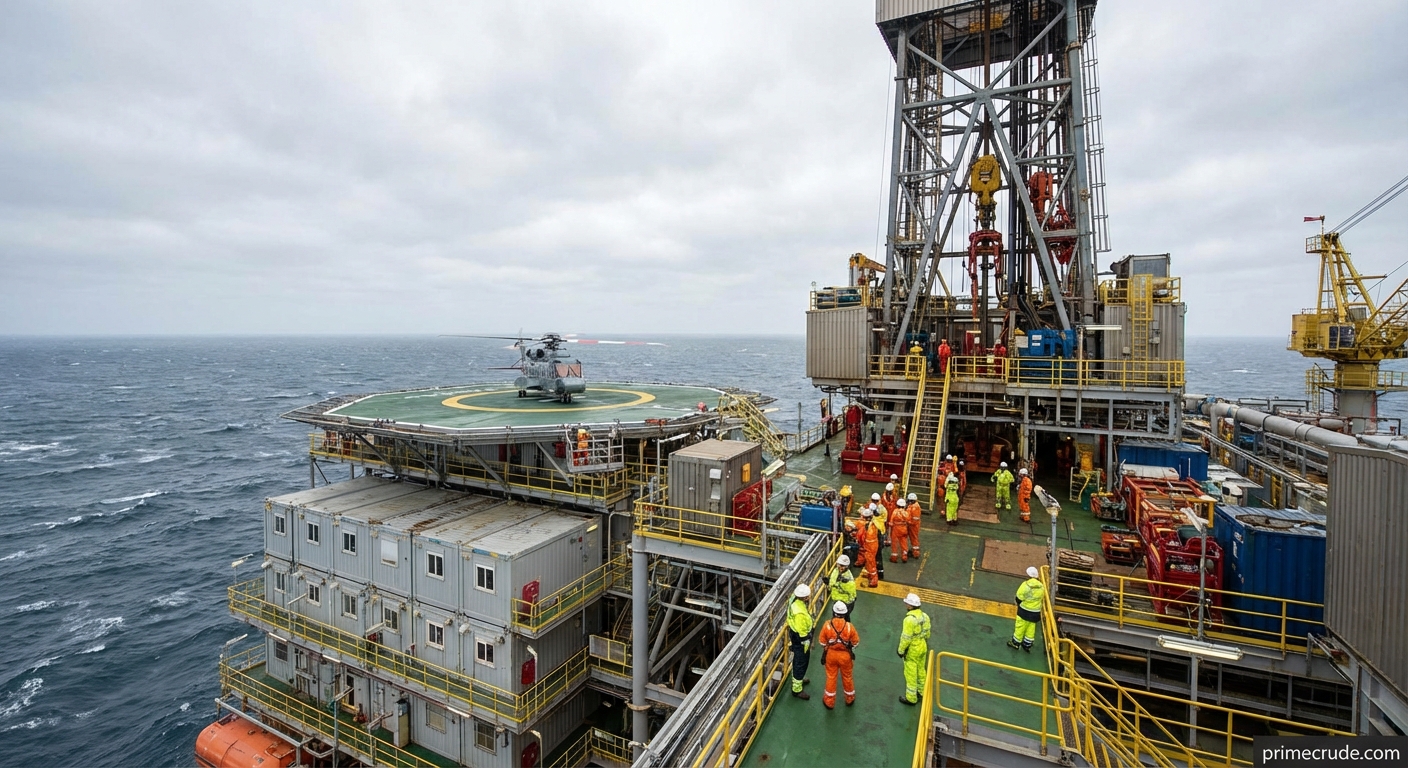
Miles offshore in the Gulf of Mexico, engineering marvels rise from the ocean—structures taller than skyscrapers,
supporting equipment weighing tens of thousands of tons, staffed by workers living weeks at a time in one of the
most demanding work environments on Earth. Offshore oil platforms represent some of humanity’s most impressive
engineering achievements, drilling through miles of water and seabed to tap oil reserves inaccessible from land.
These platforms range from simple steel structures in shallow water to floating cities in ultra-deepwater, each
designed for specific conditions and equipped with technology enabling operations that seemed impossible a
generation ago. Understanding how offshore platforms work and what life is like for the thousands who work on them
reveals an industry that operates largely unseen, producing substantial portions of American oil supply.
Types of Offshore Platforms
Offshore platforms come in multiple designs optimized for different water depths, operating conditions, and
production requirements. Platform selection depends on reservoir characteristics, water depth, expected production
life, and economic factors.
Fixed platforms—steel or concrete structures anchored to the seafloor—work in water up to about 1,500 feet. These
are the most traditional offshore design, providing stable production platforms for decades of operation. The vast
majority of older offshore infrastructure is fixed platform.
Floating Platforms for Deeper Water
Deeper water requires floating platforms that aren’t rigidly fixed to the seafloor. Tension-leg platforms (TLPs) are
moored by vertical tendons under tension, allowing limited vertical movement while maintaining horizontal stability.
Semi-submersibles float on pontoons, held in position by anchors or dynamic positioning systems.
The largest floating production systems are FPSOs—Floating Production, Storage, and Offloading vessels. These
ship-hulled platforms can produce, process, and store oil in remote locations without pipeline connections to shore,
offloading to shuttle tankers for transport.
| Platform Type | Water Depth Range | Key Characteristics |
|---|---|---|
| Fixed Platform | Up to ~1,500 ft | Steel/concrete tower anchored to seabed |
| Compliant Tower | 1,000-3,000 ft | Narrow flexible tower, sways with waves |
| Tension-Leg Platform | 1,500-7,000 ft | Floating hull, vertical mooring tendons |
| Semi-Submersible | 3,000-10,000+ ft | Floating on pontoons, anchor or DP moored |
| FPSO | Any depth | Ship-shaped, stores and offloads oil |
| Spar Platform | 3,000-10,000+ ft | Deep-draft cylinder, very stable |
The Drilling and Production Process
Drilling from offshore platforms follows the same basic principles as onshore drilling but with added complexity
from the water column. Drilling risers connect the platform to the seafloor, providing a conduit for drill pipe and
returning drilling fluids.
Subsea wellheads at the seafloor anchor the well and provide control points. Blowout preventers (BOPs)—massive valve
assemblies weighing hundreds of tons—sit atop wellheads to seal wells in emergency situations. The failure of the
Deepwater Horizon’s BOP in 2010 demonstrated the catastrophic consequences when these safety systems fail.
Production Systems
Once drilled, production wells flow oil and gas to the platform for processing. Separators divide oil, gas, and
water. Processing equipment removes impurities. Export systems send oil and gas to shore through pipelines or, for
FPSOs, to shuttle tankers.
Complex reservoir management optimizes production over field lifetimes lasting 20-40 years. Water injection, gas
lift, and other enhanced recovery techniques maximize total extraction from each reservoir.
Life on an Offshore Platform
Offshore workers typically work rotational schedules—21 days on, 21 days off is common—spending nearly half the year
living on platforms. During hitch, workers remain on the platform around the clock, with their work lives and
personal lives intertwined in confined spaces.
Accommodations vary by platform size and era. Older platforms may have shared cabins and limited amenities. Modern
facilities offer private or semi-private cabins, gyms, recreation rooms, and high-quality dining. Satellite internet
and phone connections maintain links to families ashore.
Work Conditions
Offshore work is demanding physically and mentally. Twelve-hour shifts are standard. Weather exposure, confined
spaces, and constant noise characterize the environment. Distance from medical facilities adds stress when health
emergencies occur.
Compensation reflects these challenges. Entry-level positions pay $50,000-70,000 annually; experienced specialized
workers earn $100,000-200,000 or more. The opportunity to work half the year while maintaining full-time income
attracts workers willing to accept the lifestyle.
Safety on Offshore Platforms
Following the Deepwater Horizon disaster that killed 11 workers and caused unprecedented environmental damage,
offshore safety regulations tightened significantly. The Bureau of Safety and Environmental Enforcement (BSEE)
enforces safety rules; industry programs add additional layers.
Blowout prevention has received particular attention. Requirements for BOP testing, maintenance, and redundancy have
expanded. Real-time monitoring of critical systems provides early warning of problems.
Emergency Response
Platforms maintain lifeboats, life rafts, and helicopter landing areas for evacuation. Emergency drills are frequent
and mandatory. Fire suppression systems, emergency shutdown systems, and muster protocols prepare crews for
worst-case scenarios.
Coast Guard and company rescue resources can reach most Gulf of Mexico platforms within hours. However, remote
locations and severe weather can delay response, emphasizing prevention over response capability.
Environmental Considerations
Offshore platforms operate under strict environmental regulations regarding discharges, emissions, and waste
handling. Produced water (water that comes up with oil) must be cleaned to strict standards before discharge.
Drilling fluids and cuttings require careful handling.
The environmental footprint extends to the seabed. Anchors, pipelines, and subsea equipment disturb benthic
habitats. Decommissioning—removing platforms at the end of production life—involves either complete removal or “rigs
to reefs” conversion where structures become artificial reefs.
The Deepwater Horizon Legacy
The 2010 Deepwater Horizon disaster killed 11 workers and released nearly 5 million barrels of oil into the Gulf of
Mexico over 87 days. The disaster transformed offshore regulation, forcing industry reforms and creating ongoing
legal and environmental consequences.
New regulations require operators to demonstrate response capability for worst-case discharges. Containment
equipment is pre-positioned in the Gulf. Financial responsibility requirements ensure companies can fund cleanup and
damages.
Technology and Innovation
Offshore production continuously pushes technology frontiers. Current deepwater records exceed 10,000 feet of water
depth—nearly two miles down before the drill even reaches the seafloor. These achievements require advanced
materials, instrumentation, and engineering.
Subsea processing—performing separation and boosting on the seafloor rather than on platforms—reduces platform size
and enables production from fields too small or remote for traditional platforms.
Automation and Remote Operations
Platform automation reduces crew requirements and improves safety by removing workers from hazardous tasks. Remotely
operated vehicles (ROVs) perform subsea inspection and maintenance that previously required divers.
Onshore control centers can monitor and partially operate some platforms remotely. Normally unmanned platforms for
smaller fields check boxes for cost reduction but require different safety approaches.
Economics of Offshore Production
Offshore development requires massive upfront investment—billions of dollars for large deepwater projects—with
payback over decades of production. This capital intensity creates boom-bust cycles as oil prices fluctuate around
project economics.
Breakeven costs for deepwater Gulf of Mexico projects typically range from $40-60 per barrel. Projects sanctioned
during high-price periods can become financially distressed when prices fall, as occurred during the 2014-2016 oil
price collapse.
Production Sharing and Royalties
Offshore production in federal waters requires royalty payments to the U.S. government—currently 18.75% of
production value for deepwater leases. Lease bonuses paid for exploration rights add additional government revenue
including billions collected in competitive auctions.
These revenues contribute significantly to federal income. Debates over expanding or restricting offshore access
often center on balancing revenue generation against environmental and coastal protection concerns.
The Workforce Challenge
The offshore industry faces workforce challenges as experienced workers retire and younger generations pursue other
careers. The demanding lifestyle, boom-bust employment cycles, and industry reputation following Deepwater Horizon
deter some potential workers.
Training programs attempt to develop new workers. Community colleges in Gulf Coast states offer petroleum technology
programs. Companies invest in internal training to develop the specialized skills offshore work requires.
Diversity and Inclusion
Historically male-dominated, the offshore industry is slowly becoming more diverse. Women now hold positions from
roughneck to platform manager, though remaining a small minority. Living quarters and facilities on older platforms
sometimes weren’t designed for mixed-gender crews.
Industry groups and companies are working to improve diversity, recognizing both equity concerns and the need to
access the broadest possible talent pool as workforce challenges intensify.
Future of Offshore Production
Offshore production faces uncertain long-term prospects as energy transition progresses. Major oil companies are
rebalancing portfolios toward lower-carbon investments, reducing emphasis on offshore development. Some new projects
continue, but fewer than during previous expansions.
Existing production will continue for decades as fields produce remaining reserves. Decommissioning activity will
increase as older fields deplete—creating different work but maintaining offshore employment.
Offshore Wind Connection
Offshore wind development is creating alternative employment for offshore workers. Skills in marine operations,
heavy equipment, and working in challenging offshore environments transfer to wind turbine installation and
maintenance.
Some oil companies are intentionally positioning as offshore energy companies serving both hydrocarbon and renewable
offshore production. This transition may preserve jobs even as oil and gas activity declines.
Conclusion
Offshore oil platforms represent remarkable engineering and human achievement—drilling miles below the ocean
surface, staffed by workers living in demanding conditions far from shore. The Gulf of Mexico platforms provide
substantial portions of U.S. oil production through technology and expertise developed over decades.
Safety improvements following Deepwater Horizon have reduced but not eliminated risks inherent in offshore
operations. Environmental protections continue balancing production benefits against ecosystem concerns.
The future of offshore production depends on oil demand trajectory, technology advancement, and policy decisions
balancing energy production against environmental protection. Whatever happens, the platforms already built will
continue producing for decades—monuments to industrial ambition visible from shore.
The offshore platforms rising from Gulf waters represent one of humanity’s most challenging industrial
achievements—enabling oil production that powers modern life from beneath miles of ocean.
About the Author

-768x419.png)