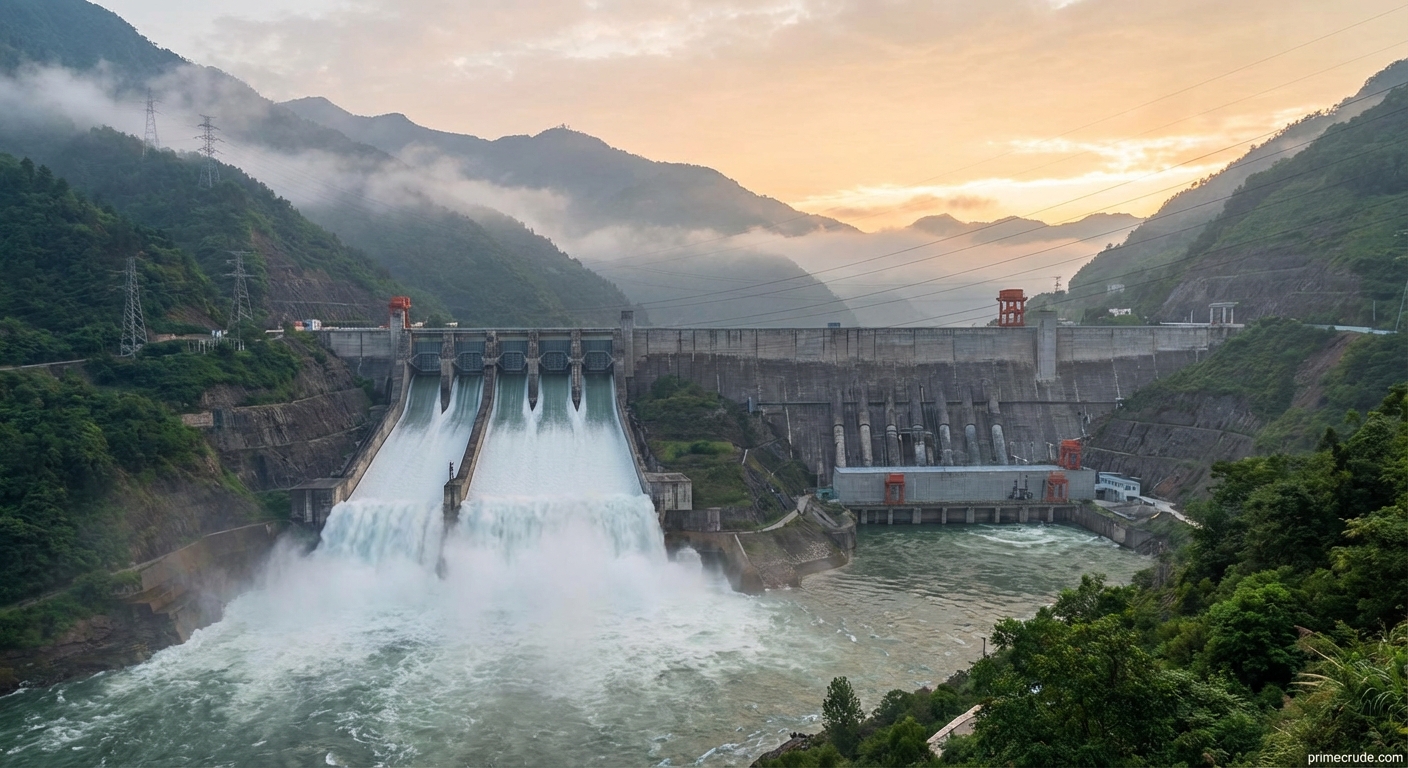
Across the United States and around the world, thousands of hydroelectric dams built during the mid-twentieth
century continue generating clean electricity decades after their expected lifespans. Many of these concrete
monuments to engineering ambition celebrated their fiftieth birthdays years ago, yet they persist as reliable
workhorses of the electrical grid. The secret to their longevity lies in continuous modernization programs that
replace aging components, upgrade turbine technology, and enhance control systems while preserving the massive civil
structures that would cost billions to replicate today. Understanding how utilities breathe new life into aging
hydroelectric infrastructure reveals why this technology remains relevant in an era of solar panels and wind
turbines, and why smart modernization often outperforms building new generation capacity from scratch.
The Legacy of Mid-Century Hydropower
The golden age of dam construction in the United States spanned from the 1930s through the 1970s. The Hoover Dam,
Grand Coulee, and hundreds of smaller projects transformed the electrical landscape, bringing power to rural areas
and fueling industrial growth. By 1980, most economically viable dam sites had been developed, leaving a fleet of
facilities that now average 50-70 years in age.
These aging dams present both challenges and opportunities. The concrete and steel structures remain largely
sound—properly maintained, concrete actually strengthens over time. However, the mechanical and electrical equipment
requires periodic replacement. Turbines, generators, transformers, and control systems designed with 1960s
technology can’t match modern efficiency or capabilities.
Why Modernize Rather Than Replace?
Building new hydroelectric dams has become extraordinarily difficult in developed countries. Environmental
regulations, competing land uses, and public opposition make permitting new dams nearly impossible. The Army Corps
of Engineers has approved virtually no new dam construction in decades. Even if permitted, new dam construction
would cost far more than upgrading existing facilities.
Modernization costs typically run 10-30% of new construction costs while delivering comparable output improvements.
A $100 million modernization might add 50-100 MW of capacity through efficiency gains alone, capacity that would
cost $500 million or more to build as new wind or solar generation.
Components That Require Modernization
Hydroelectric dam modernization addresses multiple systems that age at different rates. Understanding these
components helps appreciate the complexity and value of comprehensive upgrade programs.
Turbines, the spinning wheels that extract energy from falling water, typically last 40-60 years before requiring
major rebuilding or replacement. Modern turbine designs offer significantly improved efficiency, particularly at
partial loads. Replacing a 1960s-era turbine with a modern design can boost energy output by 5-15% from the same
water flow.
Generator and Electrical Systems
Generators convert the turbine’s rotational energy to electricity. Like turbines, generators last decades but
eventually require rewinding or replacement. Modern generators offer higher efficiency, better power factor
characteristics, and reduced maintenance requirements.
Transformers, switchgear, and transmission connections also age and require replacement. Upgrading these systems
often improves reliability while enabling integration with modern grid management systems. Many older dams operate
with minimal automation; modernization typically includes digital control systems that optimize operations.
Civil Works and Dam Safety
While concrete structures last indefinitely with proper maintenance, certain civil components require attention.
Spillway gates, intake structures, and fish passage facilities may need rehabilitation. Dam safety regulations have
evolved, sometimes requiring modifications to meet current standards.
These civil works updates, while expensive, extend the dam’s operational life for another 50-100 years. The
investment makes economic sense when amortized over such extended periods.
Efficiency Gains from Modern Technology
The efficiency improvements achievable through modernization are substantial and directly translate to more
electricity from the same water. Old turbines might operate at 85% efficiency while modern replacements achieve
93-95% efficiency. This 8-10 percentage point improvement means nearly 10% more power output.
Variable speed technology represents another major advance. Traditional hydroelectric units operate at fixed
rotational speeds determined by the electrical grid frequency. Variable speed units can adjust their speed to match
water conditions, optimizing efficiency across a wider range of flows and heads.
Automation and Grid Services
Modern control systems transform how dams interact with the electrical grid. Automated systems respond to grid
signals in milliseconds, providing frequency regulation and voltage support services that utilities increasingly
value. Some modernized dams earn significant revenue from grid services beyond their basic energy production.
Advanced monitoring systems detect developing problems before they cause failures. Vibration sensors, temperature
monitors, and oil analysis systems provide early warning of equipment issues, allowing scheduled maintenance rather
than emergency repairs.
Case Studies in Successful Modernization
The Tennessee Valley Authority (TVA) has undertaken one of the most comprehensive hydroelectric modernization
programs in the United States. Over two decades, TVA has upgraded turbines and generators at facilities throughout
the Tennessee River system, adding over 300 MW of capacity through efficiency improvements alone.
The Chickamauga Dam modernization illustrates the approach. Original 1940s equipment was replaced with modern
turbines and generators, increasing capacity from 108 MW to 160 MW—a 48% increase from the same dam and water flow.
The $200 million investment will pay for itself through increased electricity sales within 15 years.
Bureau of Reclamation Programs
The Bureau of Reclamation operates major dams throughout the western United States, including Glen Canyon, Hoover,
and Grand Coulee. Reclamation’s modernization programs focus on both efficiency and reliability, recognizing these
dams’ critical importance to regional water and power supplies.
Grand Coulee Dam, the largest hydroelectric facility in the United States, has undergone continuous modernization
since its 1942 commissioning. Recent projects include generator rewinds, turbine replacements, and control system
upgrades that maintain the facility at peak performance despite its age.
Environmental Considerations in Modernization
Hydroelectric dam modernization often incorporates environmental improvements that old facilities lacked. Fish
passage systems, minimum flow requirements, and habitat restoration may be conditions of renewed operating licenses.
While adding cost, these improvements address legitimate environmental concerns about dam impacts.
Modern turbine designs can also reduce fish mortality. “Fish-friendly” turbines feature specialized blade shapes and
slower rotational speeds that allow fish passing through to survive at higher rates than with old equipment.
Sediment and Water Quality
Aging dams often accumulate sediment behind them, reducing reservoir capacity and affecting downstream ecosystems.
Modernization projects may include sediment management strategies that balance operational needs with environmental
health.
Water temperature and oxygen content downstream of dams can differ from natural conditions. Selective withdrawal
systems and aeration equipment, often included in modernization projects, can improve downstream water quality for
aquatic life.
The Role of Hydropower in Modern Grids
Despite its century-old technology, hydropower provides irreplaceable services to modern electrical grids. The
ability to rapidly adjust output makes hydroelectric dams ideal complements to variable solar and wind generation. A
dam can ramp from minimum to full power in minutes, covering gaps when clouds pass over solar installations or wind
speeds drop.
Pumped storage hydropower takes this flexibility further. During periods of excess solar or wind generation, pumped
storage facilities pump water uphill to reservoirs. When generation is needed, the water flows back down through
turbines. These facilities function as massive batteries, storing renewable energy for later use.
Grid Stability Services
Hydroelectric generators provide rotating mass that helps stabilize grid frequency. As solar and wind without
rotating components grow, this “inertia” service becomes more valuable. Some modernization projects specifically
enhance inertia provision capabilities.
Black start capability—the ability to restart generation after a total grid failure—is another critical service
hydro provides. Nuclear, coal, and gas plants typically require external power to start; many hydroelectric plants
can self-start using only the energy of falling water.
Economic Analysis of Modernization
The economics of hydroelectric modernization compare favorably with alternative generation investments.
Modernization costs typically range from $500 to $1,500 per kilowatt of capacity added or improved, well below the
$2,000-4,000 per kilowatt for new wind or solar plus storage.
| Investment Option | Cost per kW | Lifespan | Capacity Factor |
|---|---|---|---|
| Hydro Modernization | $500-1,500 | 50+ years | 40-60% |
| New Solar + Storage | $2,500-3,500 | 25-30 years | 25-30% |
| New Wind + Storage | $2,000-3,000 | 25-30 years | 35-45% |
| New Natural Gas | $1,000-1,500 | 30-40 years | Variable |
Hydropower’s long asset life extends the value of modernization investments. Equipment installed today will operate
for 40-60 years, compared to 25-30 years for solar panels or wind turbines.
Revenue Enhancement Opportunities
Beyond efficiency improvements, modernization can enable new revenue streams. Upgraded facilities can participate in
ancillary service markets, providing frequency regulation, voltage support, and reserve capacity that command
premium prices.
Some modernization projects add capacity specifically for peaking service—generating primarily during high-price
hours rather than around the clock. Strategic operation based on market prices rather than simply maximum generation
can significantly improve project economics.
Challenges and Limitations
Hydroelectric modernization isn’t without challenges. Financing large capital projects requires long-term commitment
from utilities or public power agencies. Some older dams may not justify modernization investment due to small size,
environmental issues, or other factors.
Climate change introduces uncertainty about future water availability. Dams in regions facing drought risk may see
reduced generation regardless of equipment efficiency. Modernization decisions should incorporate realistic
projections of future hydrology.
Regulatory and Licensing Complexity
Operating licenses for non-federal dams require periodic renewal by the Federal Energy Regulatory Commission (FERC).
The relicensing process, which can take a decade or longer, often imposes new environmental requirements.
Uncertainty about future license terms complicates modernization investment decisions.
Some environmental groups oppose any dam operation and advocate for dam removal rather than modernization. While
removal may be appropriate for dams with severe environmental impacts and limited benefits, wholesale dam removal
would sacrifice billions of kilowatt-hours of clean electricity.
International Perspectives
The United States isn’t alone in facing hydroelectric modernization needs. Canada, with even larger hydroelectric
resources, has similar aging infrastructure. Brazil, China, Norway, and other hydro-dependent nations all invest
heavily in maintaining and upgrading their dam fleets.
International experience provides valuable lessons. Norway, with one of the oldest hydroelectric systems, has
maintained high performance through continuous investment. China has rapidly developed new capacity while also
modernizing older installations with impressive efficiency gains.
Technology Transfer Opportunities
Modernization equipment and expertise developed for wealthy countries can benefit developing nations with aging
hydroelectric infrastructure. Many countries built dams with assistance from the World Bank and development agencies
decades ago; those facilities now need upgrading.
Manufacturers like GE Renewable Energy, Voith, and Andritz have developed modular modernization solutions that can
be adapted to various dam configurations worldwide.
Future Trends in Hydropower
The future of hydropower lies primarily in optimizing existing resources rather than new dam construction.
Modernization programs will continue for decades as the dam fleet ages through upgrade cycles. New digital
technologies will enable even more sophisticated optimization.
Pumped storage development represents one area where new construction remains viable. Sites that don’t require new
river dams—using existing reservoirs, mines, or purpose-built upper pools—face fewer environmental obstacles.
Several large pumped storage projects are under development in the United States.
Integration with Variable Renewables
Hydropower’s role as a flexible complement to solar and wind will grow in importance. Modernized dams with fast
response capabilities are ideally suited to balance intermittent generation. System planners increasingly value this
flexibility as renewable penetration grows.
Battery storage competes with hydropower for some grid services but faces different economic profiles. For daily
cycling, batteries may prove competitive; for seasonal storage and long-duration flexibility, hydropower remains
unmatched.
Conclusion
The hydroelectric dams built by previous generations represent invaluable infrastructure that continues delivering
clean electricity decades after construction. Rather than replacing these aging facilities, utilities wisely invest
in modernization programs that extract maximum value from existing civil works while upgrading mechanical and
electrical equipment to modern standards.
Modernization typically costs a fraction of new construction while delivering comparable capacity additions through
efficiency improvements. The extended lifespan of civil structures means modernization investments pay dividends for
50 years or more. Environmental upgrades address legitimate concerns while preserving the carbon-free generation
essential to clean energy goals.
In an era obsessed with the newest technologies, hydroelectric dam modernization reminds us that sometimes the best
infrastructure is what we’ve already built. These engineering marvels, with thoughtful upgrades, will power cities
for another half-century and beyond.
The dams built by our grandparents, renewed through smart modernization, will power our grandchildren—a
remarkable testament to both their original engineering and the ongoing investments that keep them
performing.
About the Author