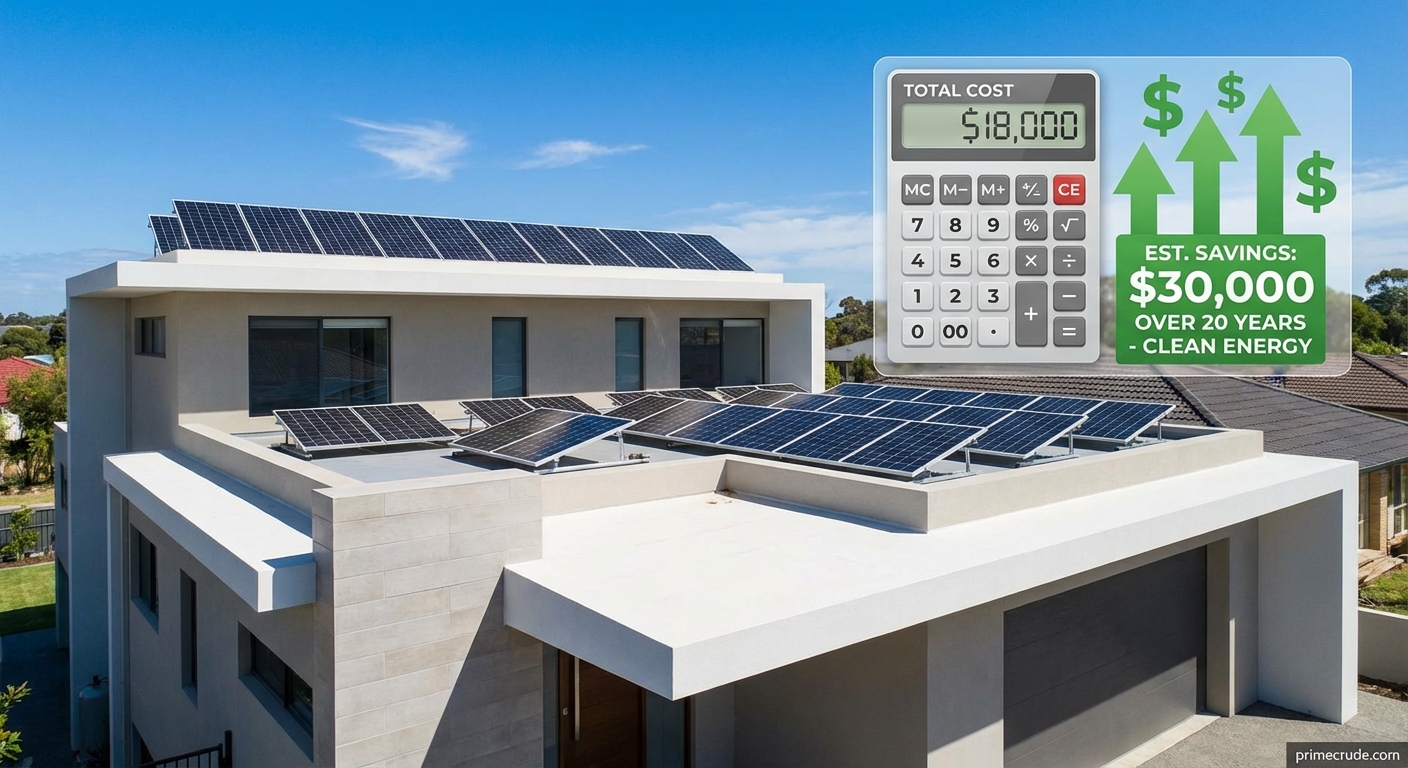
The solar industry loves to trumpet declining costs, and for good reason. Solar panels that cost $10 per watt in
2010 now cost less than $1 per watt. But that headline figure obscures substantial complexity for homeowners trying
to budget a solar installation. The panels themselves represent only a fraction of total project cost. Installation
labor, electrical equipment, permitting, and utility interconnection all add up. Understanding the true, all-in cost
of going solar in 2026 requires looking beyond marketing claims to examine what you’ll actually pay and what you’ll
receive in return.
The Current Cost Landscape
A typical residential solar installation in the United States costs between $15,000 and $35,000 before any
incentives or tax credits. This wide range reflects differences in system size, equipment quality, installation
complexity, and regional market conditions. The average American home installs a 8-10 kilowatt (kW) system, with
costs averaging roughly $2.70-3.50 per watt installed.
These figures represent significant declines from just five years ago, when installed costs often exceeded $4 per
watt. Continued reductions in equipment prices, improved installer efficiency, and market competition have driven
costs lower. However, the pace of decline has slowed as soft costs (labor, permitting, customer acquisition) now
dominate total expenses and prove harder to reduce.
Breaking Down the Cost Components
Understanding what you’re paying for helps evaluate quotes and identify savings opportunities. The major cost
components of a residential solar installation include:
| Component | Typical Share of Total Cost |
|---|---|
| Solar Panels | 30-35% |
| Inverter(s) | 10-15% |
| Mounting and Electrical Hardware | 10-15% |
| Installation Labor | 15-20% |
| Permitting and Inspection | 5-10% |
| Sales, Marketing, and Overhead | 15-25% |
That final category—sales, marketing, and overhead—often surprises homeowners. Solar companies spend substantial
amounts acquiring customers, processing financing, and maintaining business operations. These “soft costs” explain
why DIY installation can cost 50% less than hiring a major installer, though most homeowners lack the expertise for
self-installation.
Factors That Affect Your Specific Cost
The broad averages mask substantial variation based on individual circumstances. Understanding what drives your
particular cost helps in budgeting and evaluating whether solar makes sense economically.
System size represents the most obvious variable. A modest 5 kW system might cost $14,000-17,000 installed, while a
large 15 kW system could exceed $40,000. Determining the right size depends on your electricity consumption,
available roof space, and financial objectives. Oversizing provides more energy independence but costs more upfront.
Geographic Variations
Where you live significantly affects solar costs. California, despite high labor costs, has competitive solar
pricing due to installer competition and streamlined permitting. Some Northeastern states face higher costs from
snow load requirements and licensed electrician mandates. Southern states often offer middling prices with good
sunlight resources.
The solar resource itself matters for value rather than cost. A system in Arizona generates roughly 50% more
electricity annually than an identical system in Michigan. This production difference dramatically affects payback
periods and lifetime savings even when installation costs are similar.
Roof Characteristics
Your roof’s characteristics influence installation cost. Simple, south-facing roofs with asphalt shingles and no
shade represent ideal installations. Complex roofs with multiple planes, hip configurations, skylights, or venting
require additional mounting hardware and labor. Tile or metal roofing needs specialized installation techniques that
add cost.
Roof condition matters too. Installing solar on a roof needing replacement within the next decade is unwise, as the
panels must be removed and reinstalled when roofing work occurs. Smart homeowners address roofing needs before or
concurrently with solar installation.
Understanding Solar Incentives
Few homeowners pay full sticker price for solar installations. Federal tax credits, state incentives, and utility
rebates significantly reduce net costs. Understanding available incentives is essential for accurate budgeting.
The federal Investment Tax Credit (ITC) remains the largest incentive for most homeowners. Through 2032, the ITC
provides a 30% credit against federal income tax liability for residential solar installation costs. A $25,000
system generates a $7,500 tax credit, reducing net cost to $17,500.
State and Local Incentives
State incentives vary dramatically. Some states offer substantial additional credits, rebates, or property tax
exemptions for solar installations. Others provide minimal support. Checking the Database of State Incentives for
Renewables and Efficiency (DSIRE) reveals what’s available in your area.
Local utility incentives also factor in. Some utilities offer upfront rebates for solar installation. Others provide
favorable net metering policies that affect long-term value. Performance-based incentives pay ongoing amounts based
on system production. These programs change frequently as utilities adjust their approaches.
State-by-State Variations
Several states offer particularly attractive solar economics:
- New York provides a 25% state tax credit stacked on top of the federal credit
- Massachusetts offers SRECs (Solar Renewable Energy Credits) worth thousands of dollars
- California eliminated net metering but provides upfront incentives for storage
- New Jersey’s successor to SRECs continues providing ongoing payments
Conversely, some states offer minimal incentives beyond the federal credit. In these markets, solar economics depend
more heavily on local electricity prices and sunlight resources.
Financing Options and Their Impact
How you pay for solar affects both upfront costs and long-term economics. Cash purchases, loans, leases, and power
purchase agreements (PPAs) each have distinct characteristics that suit different homeowner situations.
Cash purchases provide the best long-term economics. You own the system outright, receive all incentives directly,
and avoid interest charges. However, the substantial upfront investment puts cash purchase out of reach for many
homeowners.
Solar Loans
Solar loans have become the most popular financing option. Purpose-built solar loan products offer competitive
interest rates, often below 6%, with terms extending to 15-25 years. Monthly loan payments typically approximate or
fall below the electricity cost savings, providing immediate positive cash flow.
However, interest charges add substantially to total cost. A $25,000 system financed at 5.5% over 20 years accrues
roughly $16,000 in interest, making total payments over $41,000. The time value of future savings makes this
arithmetic acceptable for many, but understanding the full cost prevents surprises.
Leases and PPAs
Solar leases and power purchase agreements require no upfront payment but provide less favorable long-term
economics. Under a lease, you pay a fixed monthly amount for use of a solar system owned by a third party. Under a
PPA, you purchase electricity at a predetermined rate, typically below utility prices.
These zero-down options put solar within reach for more homeowners but capture much of the value for the third-party
owner. The installer receives the tax credit and depreciation benefits that would otherwise go to you. Over 20
years, leased systems typically cost the homeowner $10,000-20,000 more than owned systems.
Calculating Your Payback Period
The payback period—time required to recover your investment through electricity savings—represents a key metric for
evaluating solar. This calculation depends on your net cost after incentives, electricity rates, and system
production.
Consider a worked example: A homeowner installs a 9 kW system for $27,000 gross cost. The federal tax credit reduces
net cost to $18,900. The system produces 12,000 kWh annually in a region averaging $0.15 per kWh. Annual savings are
$1,800. Simple payback: $18,900 / $1,800 = 10.5 years.
Factors Improving Payback
Higher electricity rates dramatically improve solar economics. Homeowners paying $0.25 per kWh or more see paybacks
under five years in many cases. Rate increases over the system’s lifetime compound these savings.
Additional state incentives reduce net cost and accelerate payback. Strong net metering policies that credit excess
production at retail rates improve value. Time-of-use rate structures that pay premium rates during peak afternoon
hours particularly favor solar.
Factors Worsening Payback
Low electricity prices extend payback periods. Some regions with rates below $0.10 per kWh struggle to justify solar
economics regardless of other factors. Shading, poor roof orientation, or northern climates reduce production and
savings.
Financing costs extend payback when properly accounted for. Interest payments reduce net benefits. Including
financing costs in payback calculations provides more realistic expectations than calculations assuming cash
purchase.
Lifetime Savings and Return on Investment
Payback period tells only part of the story. Once the system pays for itself, the remaining 15-20 years of its
lifespan deliver essentially free electricity. Lifetime savings often exceed $30,000-50,000 for well-designed
systems in favorable markets.
Return on investment (ROI) provides another lens for evaluating solar as a financial decision. The internal rate of
return for typical residential solar installations ranges from 8-15%, comparing favorably with many investment
alternatives. This return is effectively tax-free, as you’re saving on expenses rather than earning taxable income.
Production Decline Considerations
Solar panels degrade slowly over time, producing slightly less electricity each year. Typical panels carry
warranties guaranteeing at least 80% of original production after 25 years. Year-over-year degradation of 0.5-0.7%
is typical for modern panels.
This degradation modestly affects lifetime economics. A 9 kW system producing 12,000 kWh in year one might produce
only 10,500 kWh by year 25. Projections should account for this decline rather than assuming constant production.
Should You Add Battery Storage?
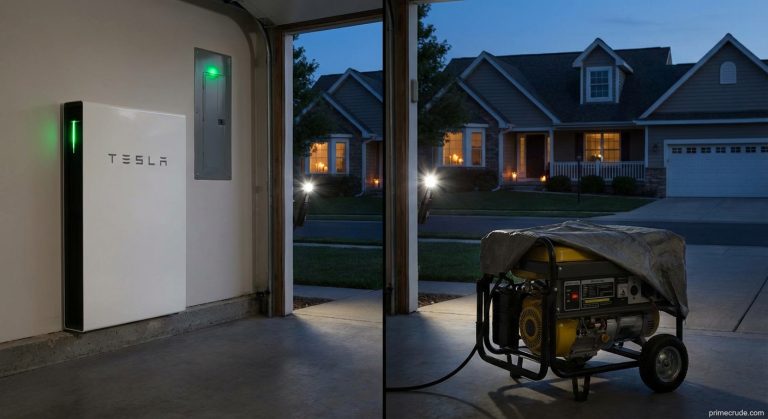
Battery storage systems, while separate from solar panels, increasingly pair with solar installations. Home
batteries store excess solar production for use after sunset, during outages, or when rates peak. However, batteries
add substantial cost with complex economics.
A typical home battery (10-13.5 kWh capacity) costs $10,000-16,000 installed, adding significantly to total project
cost. These costs have declined from earlier levels but remain high relative to alternatives like net metering for
managing excess production.
When Batteries Make Sense
Battery storage delivers value in specific circumstances:
- Regions with unfavorable net metering that heavily discounts exported solar
- Areas with time-of-use rates where evening prices are substantially higher than daytime
- Homeowners prioritizing backup power for grid outages
- Situations where batteries qualify for additional incentives
Without these factors, battery storage often represents a poor financial decision despite its appeal. The technology
improves annually, suggesting that waiting for better economics may be wise for many homeowners.
Getting Quality Quotes
Quote comparison is essential for getting a fair price. Solar costs vary substantially between installers, with some
charging 50% more than competitors for comparable systems. Obtaining multiple quotes reveals market pricing and
identifies outliers.
Three to five quotes provide reasonable coverage. Online platforms like EnergySage facilitate quote collection by
connecting homeowners with multiple pre-screened installers. Local installers often offer competitive pricing
compared to national brands with high marketing costs.
What to Look for in Quotes
Beyond total price, evaluate quotes on equipment quality, warranty coverage, and installer reputation. Premium panel
brands (LG, Panasonic, SunPower) command price premiums but offer longer warranties and potentially better long-term
production. Inverter choice affects both performance and monitoring capabilities.
Workmanship warranties from installers matter separately from equipment warranties. A 25-year panel warranty means
little if the installer who’d honor it goes out of business. Selecting established companies with strong track
records reduces this risk.
Common Mistakes to Avoid
Solar shoppers often fall into predictable traps that cost money or cause regret. Awareness of these pitfalls helps
in navigating the purchase process.
Selecting the cheapest quote without considering quality frequently leads to problems. Low-cost installers sometimes
cut corners on equipment, installation quality, or customer service. Slightly higher prices from reputable
installers often prove worthwhile through better long-term performance and service.
Oversizing or Undersizing Systems
System sizing requires thoughtful analysis of current and future electricity needs. Undersizing leaves you buying
utility power despite having solar. Oversizing in areas without favorable net metering wastes money on production
you can’t use or sell advantageously.
Consider future changes: electric vehicle charging, heat pump installation, or household composition changes affect
electricity demand. A system sized for today’s usage may be inadequate in five years.
Conclusion
The real cost of solar panels in 2026 extends well beyond the panels themselves. A typical residential installation
runs $15,000-35,000 before incentives, with the federal tax credit and possible state programs reducing net cost by
30-50%. Financing adds interest costs that should be factored into economic calculations.
For most homeowners in favorable markets, solar represents an attractive investment with payback periods of 6-12
years and lifetime savings exceeding $30,000-50,000. Those in regions with low electricity rates, poor sun exposure,
or unfavorable policy environments should calculate carefully, as economics vary substantially.
Getting multiple quotes, understanding incentives, and avoiding common pitfalls helps ensure a solar installation
delivers expected value. The technology has matured to the point where solar is no longer an early-adopter curiosity
but a mainstream home improvement with solid economics for many American households.
Understanding the true, all-in cost of solar—not just the headline panel prices—enables informed decisions
about whether solar power makes sense for your home and budget.
About the Author