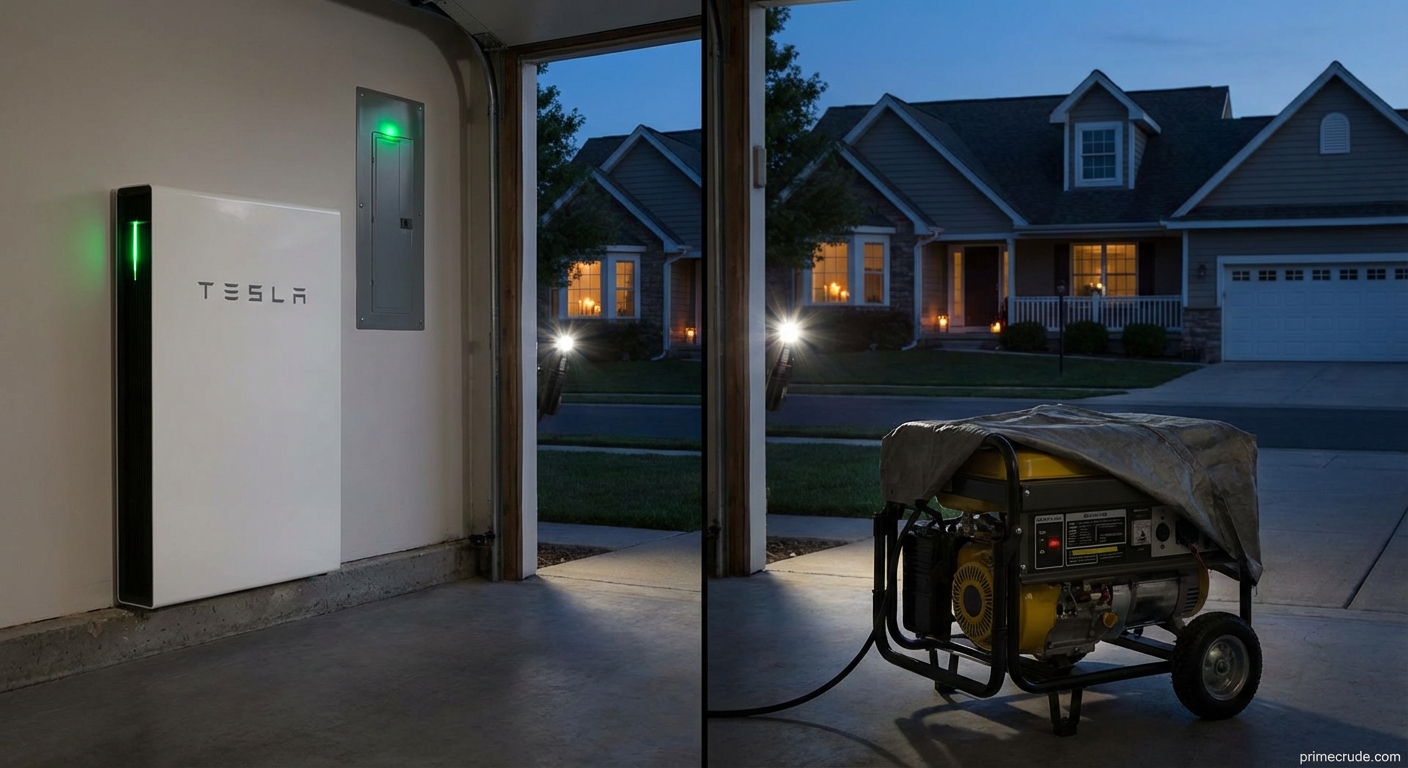
Power outages have become increasingly common as extreme weather intensifies and aging grid infrastructure struggles
to keep pace. When the lights go out, homeowners want backup power that keeps essential systems
running—refrigerators, medical equipment, internet access for remote work, and basic lighting. Two main options
compete for this market: traditional fuel-burning generators and increasingly popular home battery systems. Each
technology has distinct advantages and limitations that matter enormously when you’re sitting in the dark waiting
for utility crews to restore power. Understanding the tradeoffs between generators and batteries—in terms of
capacity, duration, cost, and convenience—helps homeowners choose the backup power solution that best matches their
needs and budget.
Understanding Home Battery Systems
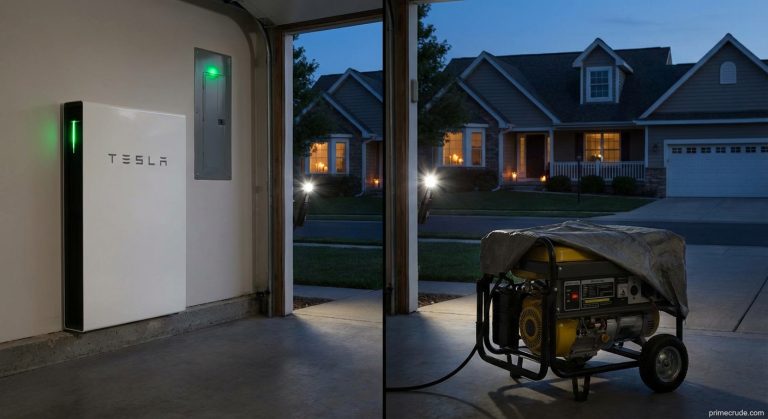
Home battery systems store electricity from the grid or solar panels in lithium-ion batteries for later use. The
Tesla Powerwall, Generac PWRcell, Enphase IQ, and similar products provide 10-20 kilowatt-hours of storage capacity
per unit, enough to power essential loads for several hours to a few days depending on consumption.
During normal operation, batteries can provide economic benefits by storing cheap off-peak electricity for use
during expensive peak periods. When paired with solar panels, batteries maximize self-consumption of generated
power. But the primary value for many buyers is blackout protection—seamless, automatic backup power when the grid
fails.
How Battery Backup Works
Battery systems connect to home electrical panels through an inverter that converts stored DC electricity to
household AC power. A transfer switch automatically disconnects from the grid during outages, preventing backfeed
that could endanger utility workers. The transition happens in milliseconds—so fast that computers and clocks don’t
notice.
Whole-home battery backup requires multiple battery units and a large inverter. Most installations instead back up
selected critical loads—refrigerator, select lights, home office, medical equipment—through a dedicated subpanel.
Understanding Generators
Generators produce electricity by burning fuel—typically gasoline, propane, natural gas, or diesel—to drive an
engine connected to an electrical generator. Portable generators provide 3-10 kilowatts and can be purchased for
$500-2,000. Standby generators permanently installed outside the home range from 10-50+ kilowatts and cost
$5,000-20,000 installed.
Generators have powered homes during outages for decades. The technology is proven, and fuel-powered generators can
run indefinitely as long as fuel supplies are maintained. This duration advantage is their primary advantage over
batteries.
Portable vs. Standby Generators
Portable generators require manual setup: wheeling outside, connecting extension cords or a transfer switch, adding
fuel, and starting. They’re relatively affordable but inconvenient and cannot operate unattended.
Standby generators install permanently on concrete pads outside homes, connect to natural gas or propane supplies,
and start automatically within seconds of detecting an outage. They provide hands-free backup but cost significantly
more than portable units.
| Feature | Home Battery System | Portable Generator | Standby Generator |
|---|---|---|---|
| Typical Cost (Installed) | $12,000-20,000 | $500-2,000 | $8,000-25,000 |
| Automatic Startup | Yes (instant) | No (manual) | Yes (~10 seconds) |
| Runtime | Hours to 1-2 days | Hours (tank refill) | Days to weeks |
| Noise Level | Silent | 65-85 dB | 55-75 dB |
| Fuel Required | None (grid/solar) | Gasoline | Natural gas/propane |
| Maintenance | Minimal | Moderate | Annual service required |
| Indoor Operation | Yes | Never (CO danger) | Outdoor only |
Runtime: The Critical Comparison
How long backup power lasts often determines whether an outage is an inconvenience or an emergency. This is where
generators and batteries differ most significantly.
A typical home battery system stores 10-15 kWh of usable energy. A home running essential loads—refrigerator, select
lights, router, phone charging—might draw 1-2 kW continuously. At that rate, one battery provides 5-15 hours of
runtime. Adding more batteries extends duration proportionally but also increases cost.
Generator Duration Advantage
Generators run as long as fuel lasts. A 20-pound propane tank powers a small generator for roughly 10 hours; a
500-gallon buried tank can last weeks. Natural gas connections provide essentially unlimited fuel (assuming gas
service remains during power outages, which isn’t guaranteed).
This unlimited runtime explains why hospitals, data centers, and other critical facilities rely on generators
despite the advancement of battery technology. For multi-day outages from hurricanes or ice storms, generators
simply provide more reliable extended backup.
Solar Pairing Changes the Equation
Home batteries paired with solar panels gain a crucial advantage: they can recharge during outages when the sun
shines. This combination provides potentially unlimited backup during extended outages as long as sunlight is
available.
Traditional solar systems without batteries shut down during outages to prevent backfeeding the grid. Battery
systems allow solar to continue operating in island mode, charging batteries during the day for use at night.
Weather Dependency
The solar-plus-battery advantage requires adequate sunshine. Outages from winter storms with overcast skies may
provide little solar recharging. Several consecutive cloudy days can deplete batteries despite having solar panels.
Geographic location significantly affects solar reliability. Sunny states like Arizona provide more consistent solar
backup than Pacific Northwest locations with frequent cloud cover.
Installation and Space Requirements
Battery systems install primarily indoors—in garages, basements, or utility rooms—requiring minimal exterior
modifications. The installation is relatively clean and doesn’t require ventilation or fuel connections.
Standby generators require outdoor installation with adequate clearance from structures, compliance with noise
ordinances, and fuel connections. Some municipalities have strict permitting requirements for generator
installations, particularly in dense neighborhoods.
Aesthetic Considerations
Indoor battery installations are essentially invisible to neighbors. Outdoor generators, while designed to be
unobtrusive, may affect home appearance or require screening with landscaping.
Noise during operation also affects neighbors. Generators produce 55-85 decibels depending on quality and
size—similar to a loud conversation to a vacuum cleaner. Batteries operate silently.
Maintenance Requirements
Home batteries require minimal maintenance. The systems are solid-state electronics with no moving parts, no fluids
to change, and no wear items requiring replacement. Manufacturers typically recommend occasional firmware updates
and monitoring for error codes.
Generators require regular maintenance: oil changes, air filter replacement, spark plug replacement, and periodic
load testing. Annual professional service typically costs $200-500. Neglecting maintenance can cause generators to
fail when needed most.
Lifespan Considerations
Home batteries typically carry 10-year warranties with expected lifespans of 10-15 years. Battery capacity degrades
over time—expect 70-80% of original capacity after 10 years. Replacement involves significant expense.
Well-maintained standby generators can last 25-30 years. However, the engine and other mechanical components
eventually require major repair or replacement.
Safety Considerations
Generators running on fossil fuels produce carbon monoxide, a deadly colorless, odorless gas. Portable generator CO
poisoning kills dozens and injures hundreds annually. Generators must never operate indoors, in garages, or near
windows or doors.
Battery systems produce no emissions and can operate safely indoors. However, lithium-ion batteries carry small fire
risks, and installations must meet electrical codes for safety.
Fuel Storage Safety
Gasoline storage for portable generators presents fire hazards and degrades over time. Fuel stabilizers extend
storage life but don’t eliminate the concern. Natural gas and propane for standby generators are safer but still
involve combustible fuel handling.
Batteries avoid fuel storage concerns entirely, eliminating a category of safety risk and logistical hassle.
Environmental Impact
Generators burn fossil fuels, producing carbon dioxide and other emissions. While household generator use is small
in the overall emission picture, climate-conscious homeowners may prefer avoiding combustion.
Battery systems charged from solar produce zero emissions during operation. Even batteries charged from the grid
provide reduced emissions if local electricity is cleaner than generator fuel combustion—which it typically is.
End-of-Life Considerations
Lithium-ion battery recycling infrastructure is developing but not yet universal. Responsible manufacturers offer
recycling programs, but some batteries may end up in landfills.
Generator disposal is straightforward—engines and steel are readily recyclable through scrap metal channels.
Cost-Benefit Analysis
For pure outage protection, standby generators typically cost less per hour of backup capacity. A $10,000 generator
can power a whole home for days; a $10,000 battery system might provide 12-24 hours of partial backup.
Batteries provide additional value beyond backup: peak rate savings, solar self-consumption optimization, and
potential utility incentive payments. These benefits can improve economics in states with favorable rate structures.
Tax Credits and Incentives
The federal Investment Tax Credit covers 30% of battery installation costs when paired with solar, significantly
improving economics. Some states offer additional incentives.
Generators do not qualify for federal energy tax credits. Fuel costs during operation add ongoing expense that
batteries avoid.
Choosing the Right Solution
The best backup power solution depends on individual circumstances. Consider outage frequency and duration in your
area, budget, noise tolerance, existing solar installation, and how critical uninterrupted power is for your
household.
For areas with prolonged outages from hurricanes or ice storms, generators provide better extended runtime
protection. For areas with shorter, more frequent outages, batteries offer convenience and daily benefits.
Hybrid Approaches
Some homeowners install both batteries and generators. Batteries provide instant, silent backup for short outages.
Generators provide extended runtime for multi-day events. This combination maximizes protection but also maximizes
cost.
Solar plus battery plus generator provides the most robust solution: solar recharges batteries daily, batteries
provide seamless backup, and generators cover extended cloudy periods.
Conclusion
Home battery backup systems and generators each offer distinct advantages for keeping lights on during power
outages. Batteries excel at seamless, silent, clean backup for shorter outages and daily energy management.
Generators provide more cost-effective extended runtime for multi-day events.
For most homeowners experiencing occasional short outages, batteries paired with solar provide adequate protection
with additional daily benefits. For those in areas prone to extended outages or with high reliability requirements,
generators remain the proven solution.
The choice ultimately depends on individual circumstances—how often and how long outages occur, budget constraints,
environmental priorities, and whether solar panels are already installed or planned.
Whether you choose batteries, generators, or both, having backup power transforms outages from emergencies
into minor inconveniences—peace of mind worth the investment.
About the Author