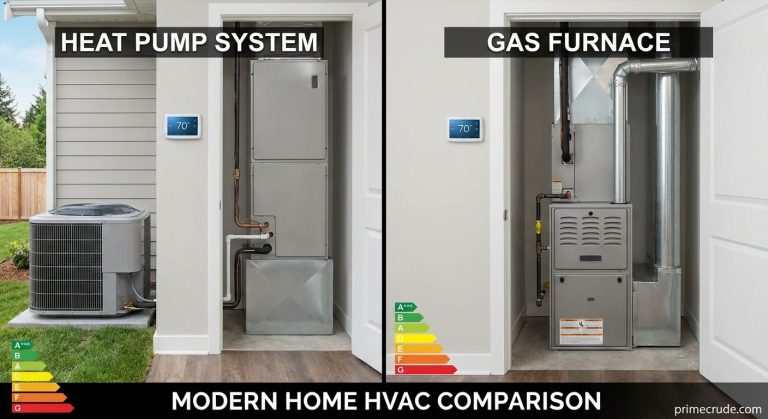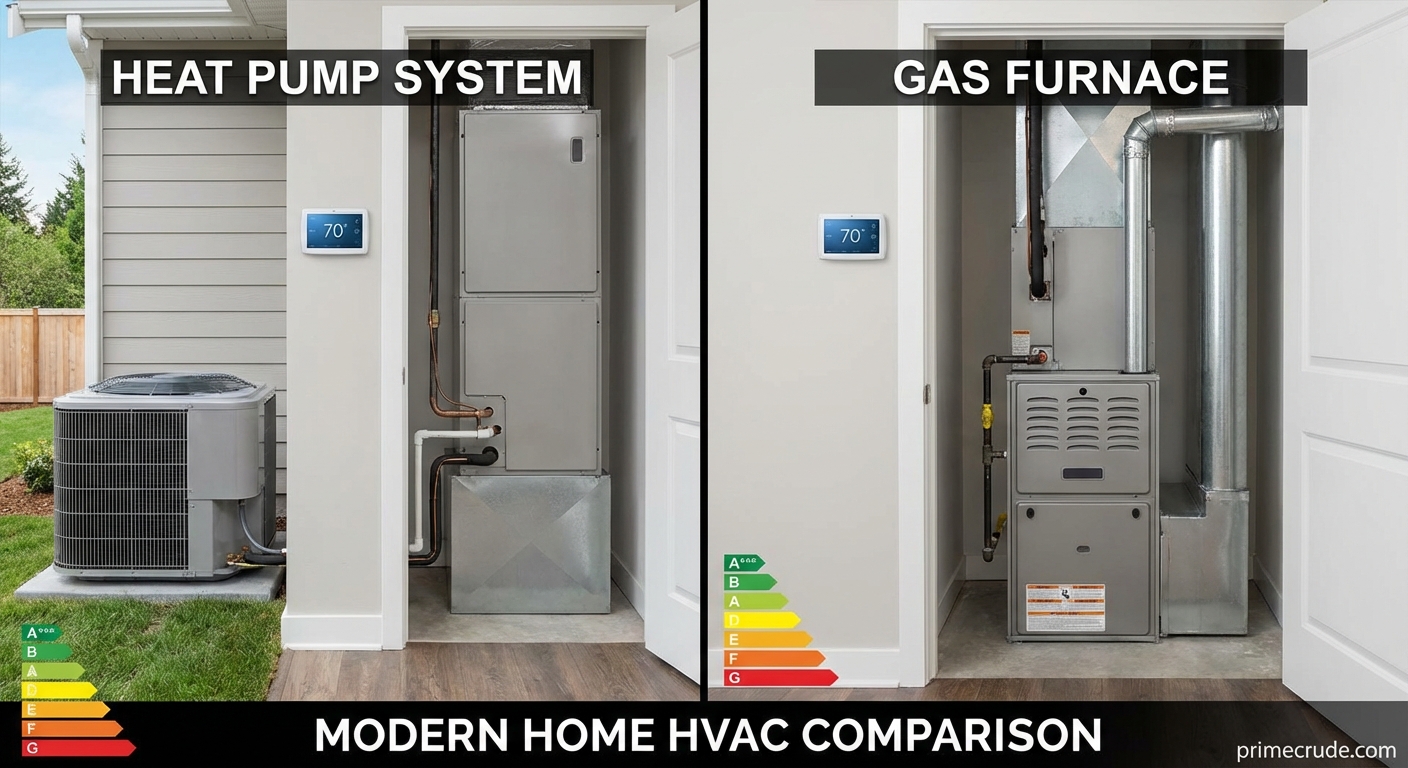
The choice between heat pumps and gas furnaces has become one of the most consequential home improvement decisions
facing American homeowners. As electricity grids become cleaner and natural gas prices fluctuate, the economic and
environmental calculus between these two heating technologies is shifting. Heat pumps—which move heat rather than
generating it—can achieve efficiencies exceeding 300%, making them dramatically cheaper to operate than gas furnaces
in some climates while potentially costing more in others. New federal tax credits and state incentives have tilted
economics further toward heat pumps. Yet gas furnaces remain the default choice for most American homes, backed by
decades of reliability and contractor familiarity. Understanding the true costs, efficiency claims, and practical
considerations helps homeowners make decisions that align with their climate, budget, and priorities.
How Heat Pumps Work
Heat pumps are essentially air conditioners that can run in reverse. In cooling mode, they remove heat from indoor
air and release it outside. In heating mode, they extract heat from outdoor air (even when it’s cold) and release it
inside. This heat transfer process uses far less energy than generating heat directly.
The key metric for heat pump efficiency is the coefficient of performance (COP)—the ratio of heat output to
electricity input. Modern heat pumps achieve COPs of 3-4 under favorable conditions, meaning they produce 3-4 units
of heat for every unit of electricity consumed. Even in cold weather, properly designed heat pumps maintain COPs
above 1.0.
Modern Cold-Climate Advances
Traditional heat pumps struggled in cold climates, losing efficiency as temperatures dropped and requiring backup
heating below 25-35°F. Modern cold-climate heat pumps, often called “hyper-heat” or “extreme cold” models, maintain
effective operation at temperatures as low as -15°F.
These advances have made heat pumps viable in regions previously considered too cold. Maine, Minnesota, and other
northern states now see significant heat pump adoption where it was once impractical.
How Gas Furnaces Work
Gas furnaces burn natural gas to heat a metal heat exchanger. Air passes over the heat exchanger, warming before
distribution through ductwork. Modern furnaces achieve efficiencies of 90-98%, meaning 90-98% of the energy in the
gas becomes useful heat.
The remaining energy is lost through exhaust venting and other inefficiencies. Even 100% furnace efficiency means
one unit of heat output per unit of fuel input—significantly less efficient than a heat pump’s 3:1 or 4:1 ratio.
Furnace Efficiency Ratings
Furnace efficiency is measured by Annual Fuel Utilization Efficiency (AFUE). Standard furnaces achieve 80% AFUE;
high-efficiency models reach 95-98%. The higher efficiency costs more upfront but reduces fuel consumption.
High-efficiency furnaces require special venting (PVC pipe rather than metal flues) that can cost more to install.
In very cold climates, condensation from high-efficiency exhaust can also create issues.
Cost Comparison: Operating Expenses
Operating cost depends on both system efficiency and fuel prices—which vary significantly by region and change over
time. Electricity costs $0.10-0.30 per kWh depending on location; natural gas costs $1.00-3.00 per therm.
A heat pump with COP of 3 uses about 10 kWh (roughly $1.50 at average rates) to produce 100,000 BTU of heat. A 95%
efficient furnace uses about 1.05 therms (roughly $1.25-1.50 at average rates) for the same heat output.
Regional Economics Vary Dramatically
In the Pacific Northwest with cheap hydroelectric power, heat pumps typically cost less than gas. In the Northeast
with expensive electricity and moderate gas prices, gas may be cheaper. Each situation requires local rate analysis.
Time-of-use electric rates can significantly affect heat pump economics. Heat pumps running during expensive peak
periods cost more; smart thermostats that pre-heat homes during off-peak hours can reduce costs.
| Factor | Heat Pump | Gas Furnace |
|---|---|---|
| Equipment Cost (Installed) | $8,000-25,000 | $4,000-12,000 |
| Efficiency (at mild temps) | 300-400% (COP 3-4) | 90-98% AFUE |
| Cold Weather Performance | Reduced (but improving) | Consistent |
| Provides Cooling | Yes (included) | No (separate AC needed) |
| Federal Tax Credit | Up to $2,000 | None |
| Lifespan | 15-20 years | 15-25 years |
| Emissions (at use) | Zero (electricity may have) | CO2, possible CO |
Installation Costs
Heat pump installation typically costs $8,000-25,000 depending on system type and complexity. Ductless mini-splits
on the lower end, whole-home ducted systems on the higher end. High-efficiency cold-climate models add cost.
Gas furnace installation runs $4,000-12,000, generally less than heat pumps. However, if the home also needs air
conditioning, adding a separate AC system brings combined costs closer to heat pump pricing since heat pumps provide
both functions.
Retrofit Considerations
Replacing a gas furnace with a heat pump may require electrical panel upgrades. Many older homes lack the electrical
capacity for large heat pumps. Panel upgrades add $1,500-4,000 to installation costs.
Ductwork designed for furnaces may not be optimal for heat pumps, which deliver air at lower temperatures requiring
higher airflow. Duct modifications may be necessary for comfort.
Federal and State Incentives
The Inflation Reduction Act provides substantial heat pump incentives. A tax credit of up to $2,000 covers 30% of
heat pump costs for Energy Star-certified equipment. No equivalent incentive exists for gas furnaces.
Low-income households may qualify for the High-Efficiency Electric Home Rebate (HEEHRA) providing up to $8,000 for
heat pump installation plus additional amounts for panel upgrades and other work.
State and Utility Programs
Many states offer additional heat pump incentives. Massachusetts, Maine, Vermont, and others provide rebates of
$500-10,000 depending on equipment type and income qualification. Utility programs add further incentives in many
areas.
Combined incentives can reduce heat pump costs to parity with or below furnace costs. Checking the Database of State
Incentives for Renewables and Efficiency (DSIRE) reveals available programs.
Climate Considerations
Heat pump efficiency varies with outdoor temperature. At 50°F, a heat pump might achieve COP of 4.0. At 20°F, COP
might drop to 2.5. At 0°F, COP might be 1.5-2.0. Cold-climate models maintain higher efficiency at low temperatures
than standard models.
In mild climates like the Southeast or Pacific Coast, heat pumps almost always outperform furnaces economically. In
very cold climates, careful analysis is needed to compare heat pump electricity costs during cold periods against
gas furnace costs.
Hybrid Systems
Dual-fuel or hybrid systems combine a heat pump with a gas furnace backup. The heat pump operates when efficient;
the furnace takes over during extreme cold. This approach captures heat pump savings during mild weather while
ensuring reliable warmth in coldest conditions.
Hybrid systems add complexity and cost but may be optimal in climates with occasional severe cold and extended mild
periods.
Environmental Impact
Heat pumps produce no emissions at the point of use. Their environmental impact depends on the electricity source.
Homes powered by renewable electricity achieve zero-emission heating. Even grid-average electricity typically
produces less CO2 per BTU than direct gas combustion.
Gas furnaces emit CO2 directly from combustion—roughly 117 pounds per million BTU of heat. This direct emission is
unavoidable regardless of grid improvements elsewhere.
Grid Decarbonization Trajectory
As electricity grids become cleaner—more solar, wind, and other renewable sources—heat pump environmental advantages
grow. An efficient heat pump powered by clean electricity produces dramatically less lifetime emissions than any
fossil fuel heating.
For climate-motivated homeowners, heat pumps offer a path to zero-emission heating that gas furnaces cannot match
regardless of efficiency improvements.
Maintenance and Reliability
Gas furnaces require annual professional maintenance including heat exchanger inspection, burner cleaning, and
safety checks. Carbon monoxide detectors are essential where combustion appliances operate.
Heat pumps require filter changes and occasional refrigerant checks. Outdoor units must be kept clear of debris and
snow. Heat pumps have more moving parts than furnaces but avoid combustion-related wear.
Lifespan Expectations
Gas furnaces typically last 15-25 years with proper maintenance. Heat pumps typically last 15-20 years – somewhat
shorter because outdoor units face weather exposure and year-round operation stresses compressors.
In climates where heat pumps provide both heating and cooling, the single system replaces what would be two systems
(furnace plus AC) with combined maintenance and replacement costs.
Comfort Considerations
Gas furnaces deliver air at high temperatures—120-140°F—creating a blast of warm air that many find comfortable.
Heat pumps deliver air at lower temperatures—90-110°F—which feels less intense even when providing the same heat.
Some people perceive heat pump air as “cool” even when the system is heating effectively. Higher airflow rates
address this but may increase noise. Getting accustomed to heat pump heating may take time for those used to
furnaces.
Humidity Effects
Heat pumps don’t dry air as much as gas furnaces, potentially maintaining more comfortable humidity levels. However,
this varies by climate, home tightness, and other factors.
In very humid climates, heat pumps’ cooling mode provides dehumidification. In very dry climates, reduced drying
from heating may be beneficial.
Making the Decision
The best choice depends on local energy prices, climate, home characteristics, and personal priorities. Calculate
estimated operating costs using local electricity and gas rates. Factor in available incentives. Consider whether
air conditioning is already needed (making heat pump integration more valuable).
For homes in moderate climates with reasonable electricity rates, heat pumps typically make economic and
environmental sense. For homes in very cold climates with cheap gas and expensive electricity, furnaces may remain
more economical despite environmental concerns.
Contractor Selection
Many HVAC contractors have more furnace experience than heat pump expertise. Proper heat pump sizing and
installation requires specific knowledge. Choose contractors with demonstrated heat pump experience and appropriate
certifications.
Incorrect sizing—too small or too large—reduces efficiency and comfort. Manual J load calculations should drive
sizing decisions rather than rule-of-thumb estimates.
Conclusion
The heat pump versus gas furnace decision involves weighing upfront costs, operating expenses, climate suitability,
environmental priorities, and practical considerations like contractor availability and home electrical capacity.
Federal incentives have shifted economics toward heat pumps. Technology advances have extended heat pump viability
into cold climates. Grid decarbonization makes heat pumps increasingly advantageous for environmental reasons.
For many homeowners, heat pumps now offer the lower-cost, cleaner choice for home heating. For others, particularly
in very cold regions with cheap gas, furnaces remain economically preferred. Individual analysis using local data
yields the best decision.
The heating decision that was once straightforward—gas furnaces everywhere—now requires thoughtful analysis
as heat pumps challenge the traditional choice with better efficiency, lower emissions, and improving
cold-climate performance.
About the Author