Every time you fill your car’s tank, you’re purchasing the end product of one of the world’s most complex industrial
processes. That clear, pungent liquid flowing through the pump started as thick, black crude oil thousands of feet
underground, possibly on another continent. The journey from wellhead to gas station involves massive ships,
sprawling refineries, extensive pipeline networks, and chemical transformations that would seem like alchemy to
earlier generations. Understanding this journey reveals why gasoline prices fluctuate, why different regions have
different fuel specifications, and why the oil industry remains so capital-intensive despite predictions of its
demise.
What Crude Oil Actually Is
Before exploring the refining journey, it helps to understand what refineries are working with. Crude oil isn’t a
single substance but rather a complex mixture of thousands of hydrocarbon compounds. These molecules contain
primarily carbon and hydrogen atoms in various configurations, from simple structures with just a few atoms to
complex arrangements containing dozens.
The composition of crude oil varies dramatically depending on its source. Light crude oils contain more of the
smaller hydrocarbon molecules that refineries prize for gasoline production. Heavy crudes have more large, complex
molecules that require additional processing. Sulfur content also varies, with “sweet” crudes containing less than
0.5% sulfur and “sour” crudes containing significantly more.
The Origin of Petroleum
Petroleum formed over millions of years from the remains of ancient marine organisms. When these microscopic plants
and animals died, their bodies settled to the ocean floor and were gradually buried under layers of sediment. Heat
and pressure from the overlying rock transformed this organic material into the hydrocarbons we extract today.
The geological conditions under which petroleum formed determine its characteristics. Crude from the Permian Basin
in Texas differs from Nigerian Bonny Light, which differs from Saudi Arabian Arab Heavy. Refineries are designed to
handle specific crude types, though most can process a range of feedstocks with varying yields and economics.
Extraction and Initial Processing
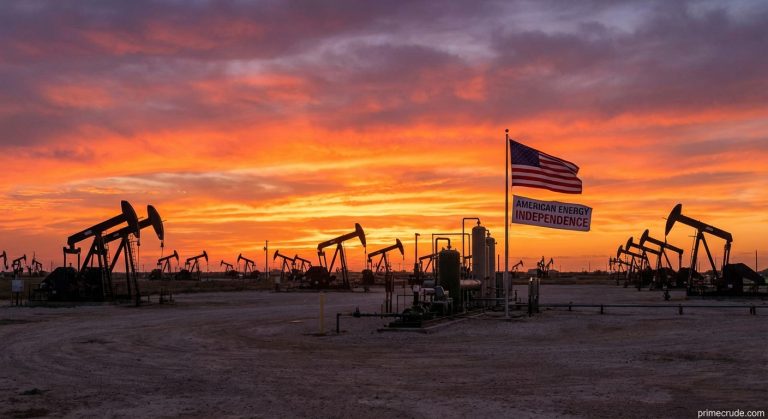
The refining journey technically begins at the wellhead, where crude oil first reaches the surface. Modern wells
might tap reservoirs thousands of feet underground, using sophisticated techniques to maintain production as
reservoir pressure declines. The fluid emerging from wells typically contains oil, natural gas, water, and various
impurities.
Initial separation occurs at production facilities near the wells. Gas is separated from liquid hydrocarbons, water
is removed, and the crude is stabilized for transportation. This initial processing doesn’t change the oil’s
fundamental nature but prepares it for the journey to refineries that may be thousands of miles away.
Quality Measurement and Pricing
Crude oil quality is measured and graded before sale. API gravity, measured in degrees, indicates density. Lighter
crudes with higher API gravity generally command premium prices because they yield more valuable products. Sulfur
content, measured as a percentage, determines whether crude is classified as sweet or sour.
These quality characteristics directly affect value. A barrel of West Texas Intermediate (WTI), a light sweet crude,
typically sells for several dollars more than an equivalent barrel of heavy sour crude from Mexico or Venezuela.
Refineries pay the premium for light sweet crudes because they require less processing to produce high-value
products.
Transportation to Refineries
Moving crude oil from production sites to refineries involves multiple transportation modes. Pipelines carry the
majority of crude in the United States, with over 190,000 miles of gathering and transmission lines crisscrossing
the country. These buried steel arteries operate continuously, pushing oil at speeds of 3-8 miles per hour.
Maritime transportation moves crude between continents. Massive tankers, some carrying over two million barrels,
shuttle between producing regions and consuming markets. The largest supertankers, classified as Very Large Crude
Carriers (VLCCs) and Ultra Large Crude Carriers (ULCCs), are among the biggest movable structures ever built.
Storage Along the Supply Chain
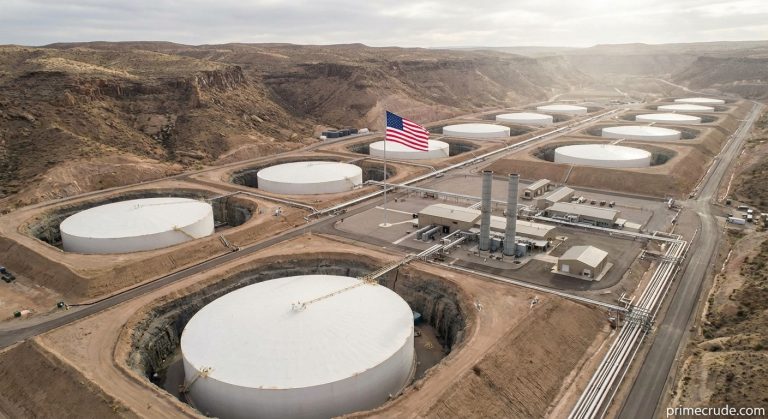
Strategic storage buffers smooth variations between production and refining. Tank farms at pipeline terminals,
marine terminals, and refineries hold inventory that allows operations to continue even when deliveries are delayed.
The United States maintains the Strategic Petroleum Reserve, with over 700 million barrels stored in underground
salt caverns along the Gulf Coast.
Storage economics matter to gasoline prices. When storage fills, crude prices tend to fall as producers struggle to
find buyers. When inventories decline, prices typically rise. Traders carefully monitor storage reports for signals
about supply-demand balance.
Arrival at the Refinery
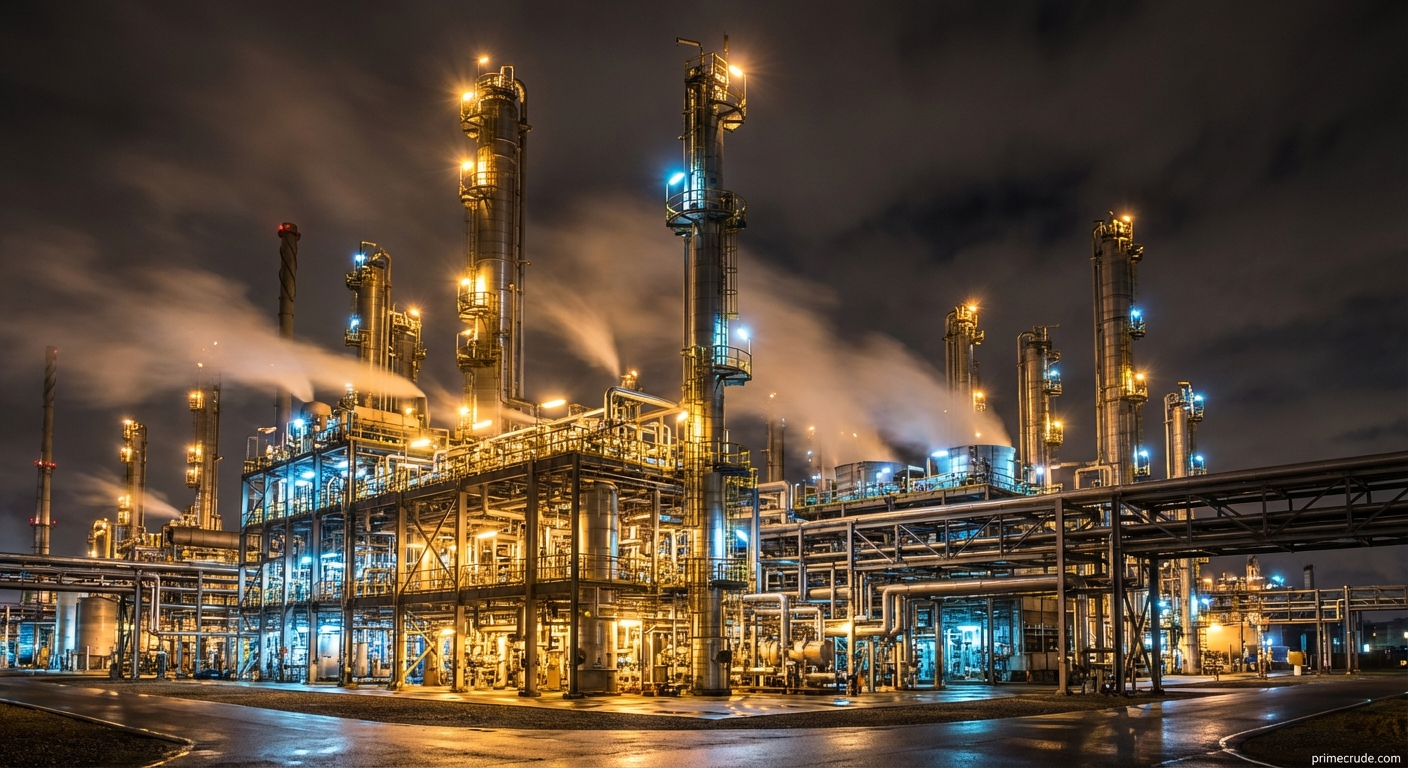
Refineries are vast industrial complexes covering hundreds or thousands of acres. A large refinery might process
over 500,000 barrels of crude per day, running continuously except for periodic maintenance shutdowns. These
facilities represent billions of dollars in capital investment and employ thousands of workers directly and through
contractors.
Crude oil arrives by pipeline, tanker, or barge depending on the refinery’s location and supply sources. Upon
arrival, the oil is tested again to confirm its quality matches specifications. Refineries blend different crude
types to optimize their processing configurations and product yields.
Refinery Layout and Design
Refineries are organized into interconnected processing units, each performing specific functions. The layout
reflects the progressive transformation of crude into finished products. Crude enters at one end and, after flowing
through various units, emerges as gasoline, diesel, jet fuel, and dozens of other products at the other end.
Modern refineries rarely look identical because each was designed for specific crude types and product demands. A
refinery built to process heavy Venezuelan crude looks quite different from one designed for light Bakken shale oil.
Configuration differences explain why refineries have varying capabilities and preferences for certain crude types.
Atmospheric Distillation: The First Separation
The refining process begins with atmospheric distillation, which separates crude oil into major fractions based on
boiling points. A crude distillation unit heats the oil to about 750°F (400°C), vaporizing most of the hydrocarbons.
The vapors then rise through a tall column called a fractionating tower.
As vapors rise through the tower, they gradually cool. Different hydrocarbons condense at different temperatures and
heights within the tower. Lighter products like naphthas and gases collect near the top, while heavier products like
atmospheric gas oil condense lower down. The heaviest material, atmospheric residue, remains liquid and collects at
the bottom.
Product Streams from Distillation
Atmospheric distillation produces several streams that become feedstocks for downstream processing. Light naphthas
from near the tower top eventually become gasoline components or petrochemical feedstocks. Kerosene range material
becomes jet fuel or heating oil. Diesel range material requires further processing before meeting fuel
specifications.
The yields from distillation depend directly on crude oil quality. Light crudes yield more of the lighter products
that command premium prices. Heavy crudes produce more of the bottom-of-the-barrel material that requires expensive
conversion processing.
Vacuum Distillation: Going Deeper
The atmospheric residue from the first tower contains heavy hydrocarbons that could be valuable if further
separated. However, these heavy molecules would crack (break down) if heated further at atmospheric pressure. Vacuum
distillation solves this problem by lowering the pressure, which reduces boiling points.
In the vacuum tower, atmospheric residue is heated under reduced pressure, allowing additional separation without
destroying the molecules. Vacuum gas oil, the primary product, becomes feedstock for conversion units. The vacuum
residue at the bottom, too heavy for further distillation, either becomes asphalt or feeds a coking unit.
The Importance of Vacuum Processing
Vacuum distillation significantly increases the useful products a refinery can extract from each barrel of crude.
Without vacuum processing, 30-40% of many crude oils would become low-value residual fuel. With vacuum units feeding
conversion processes, refineries can upgrade much of this material into transportation fuels.
The economic value of vacuum distillation has grown as demand for residual fuel oil has declined. Ships increasingly
burn cleaner fuels rather than heavy residuals. Power plants have shifted to natural gas. Finding value in the
bottom of the barrel requires the conversion capability that vacuum distillation enables.
Conversion Processes: Changing Molecules
Distillation only separates molecules; it doesn’t change their fundamental nature. Conversion processes use heat,
pressure, and catalysts to transform heavy molecules into lighter, more valuable ones. These units represent the
heart of modern refineries and determine their ability to produce gasoline and diesel from less valuable feedstocks.
Fluid catalytic cracking (FCC) is the workhorse conversion process for gasoline production. In an FCC unit, hot
catalyst particles contact heavy gas oils, cracking large molecules into smaller ones suitable for gasoline. The
spent catalyst, coated with carbon deposits from the reaction, is regenerated by burning off the carbon in a
separate vessel.
Hydrocracking for Diesel Production
Hydrocracking uses hydrogen and specialized catalysts to break down heavy molecules while simultaneously removing
impurities. This process is particularly valued for producing high-quality diesel fuel and jet fuel. Operating at
high pressures (1,000-3,000 psi) and temperatures, hydrocrackers require substantial investment but deliver premium
yields.
The choice between FCC and hydrocracking depends on desired product mix. Regions with high gasoline demand, like the
United States, rely heavily on FCC capacity. Europe and Asia, where diesel dominates, emphasize hydrocracking. Many
refineries include both technologies to maintain flexibility.
Coking: Processing the Heaviest Material
Coking handles the heaviest, most problematic refinery streams. Vacuum residue and other heavy materials are heated
intensely, causing the molecules to crack and form petroleum coke, a solid carbon residue. The lighter products from
coking feed other refinery units for further processing.
Petroleum coke finds use in steel production, aluminum smelting, and power generation. While not a high-value
product, coke production allows refineries to avoid producing large volumes of residual fuel oil, improving overall
economics. Some cokes with special properties command premium prices as electrode material.
Treatment and Upgrading Processes
Beyond separation and conversion, refineries employ various treatment processes to improve product quality.
Hydrotreating removes sulfur, nitrogen, and other contaminants using hydrogen and catalysts. This process is
essential for meeting increasingly strict fuel specifications that limit sulfur content.
Modern diesel fuel must contain less than 15 parts per million sulfur, down from the 500+ ppm common just two
decades ago. Achieving these ultra-low sulfur levels requires intensive hydrotreating that adds significant cost to
diesel production. Similar, though less stringent, requirements apply to gasoline.
Reforming for Octane Enhancement
Catalytic reforming transforms low-octane naphthas into high-octane gasoline blending components while producing
hydrogen as a byproduct. The process rearranges hydrocarbon molecules without significantly changing their size,
converting cyclical compounds into aromatics with higher octane ratings.
The hydrogen produced by reformers supplies the hydrotreating and hydrocracking units throughout the refinery. This
integration exemplifies how refineries function as interconnected systems rather than collections of independent
processes. Changes in one unit ripple through the entire facility.
Alkylation for Premium Gasoline
Alkylation combines small hydrocarbon molecules (olefins and isobutane) to create larger, highly branched molecules
ideal for premium gasoline. The alkylate produced has excellent octane ratings and burns cleanly. Alkylation units
require careful operation due to the hazardous catalysts used, either sulfuric acid or hydrofluoric acid.
As gasoline specifications have tightened, limiting the use of aromatics and other less desirable blending
components, alkylate has become increasingly valuable. Refineries with alkylation capacity can produce premium
gasoline grades with lower emissions when burned.
Blending: Creating Finished Products
The various streams from refinery processes must be combined to create finished products meeting specific
specifications. Blending is both a science and an art, balancing multiple quality parameters while minimizing costs.
Computer models assist blenders, but experience and judgment remain important.
Gasoline blending must achieve target octane ratings, vapor pressure limits, and dozens of other specifications.
Different seasons require different blends, with summer gasoline having lower vapor pressure to reduce evaporation
and winter blends incorporating more volatile components for cold starting. Regional specifications further
complicate blending.
Additives and Final Treatments
Before products leave the refinery, various additives are incorporated to improve performance. Detergent additives
in gasoline keep engine intake systems clean. Corrosion inhibitors protect fuel system components. Anti-icing
additives prevent fuel line freezing in cold weather.
These additives are proprietary formulations that refiners and marketers use to differentiate their products. While
base fuels are essentially interchangeable, additive packages vary and are a focus of marketing efforts claiming
superior engine protection or performance.
Quality Control Throughout the Process
Modern refineries employ extensive quality control systems to ensure products meet specifications. Online analyzers
continuously monitor stream properties, allowing operators to detect problems and make adjustments in real-time.
Laboratory testing provides additional verification for critical parameters.
The consequences of releasing off-specification product are severe. A batch of bad gasoline can damage thousands of
engines and lead to massive liability. Contaminated jet fuel can cause aircraft accidents. Quality control isn’t
optional; it’s fundamental to refinery operations.
Certification and Documentation
Each batch of finished product is tested and certified before release. Certificates of analysis document the test
results, providing a paper trail that follows the product through distribution. If problems emerge in the market,
documentation helps trace issues to their source.
Regulatory requirements mandate specific testing and documentation procedures. Environmental agencies verify fuel
specifications. Customers audit refinery quality programs. Third-party inspectors verify quantity and quality for
commercial transactions.
Distribution to End Users
Finished products leaving the refinery travel through a distribution network that eventually reaches your local gas
station. Bulk storage terminals receive products by pipeline, barge, or tanker. From terminals, trucks carry
products to retail stations and commercial customers.
The Colonial Pipeline, running from Houston to New York Harbor, exemplifies this distribution infrastructure.
Carrying over 100 million gallons daily, Colonial supplies much of the fuel consumed along the Eastern Seaboard.
When a ransomware attack shut down the pipeline in 2021, gasoline shortages quickly developed, demonstrating the
infrastructure’s critical importance.
The Last Mile to Your Tank
Retail gasoline stations receive deliveries from local terminals, typically within a radius of 50-100 miles. Tank
trucks holding 8,000-10,000 gallons make multiple deliveries daily to busy stations. Underground storage tanks at
the station hold inventory until you pump it into your vehicle.
At the pump, the journey from crude oil to usable fuel finally ends. The entire process, from extraction to refining
to distribution, typically takes 2-6 weeks depending on distances involved and inventory levels throughout the
supply chain.
Byproducts and Their Uses
Refining produces far more than transportation fuels. Petroleum lubricants, from motor oils to industrial greases,
come from refinery processing. Asphalt for road construction originates as refinery residue. Petrochemical
feedstocks become the raw materials for plastics, synthetic fibers, and countless consumer products.
The variety of petroleum-derived products is staggering. Paraffin waxes coat cheese and cardboard. White oils appear
in cosmetics and pharmaceuticals. Sulfur recovered from crude oil ends up in fertilizers and industrial chemicals.
Refineries truly convert crude oil into materials present throughout modern life.
Energy Products Beyond Gasoline
Diesel fuel, the second most important refinery product by volume, powers trucks, trains, ships, and heavy
equipment. Jet fuel keeps aircraft flying. Heating oil warms homes in the Northeast. Liquefied petroleum gases
(propane and butane) serve rural heating needs and petrochemical applications.
The relative demand for different products influences refinery operations and economics. When diesel demand is
strong relative to gasoline, as in winter heating season, refineries adjust operations to maximize diesel yields.
These seasonal shifts affect prices throughout the product slate.
The Environmental Footprint of Refining
Refineries are significant industrial facilities with environmental impacts that operators work to minimize. Air
emissions from combustion and process operations are controlled through various technologies. Wastewater receives
treatment before discharge. Solid wastes require proper handling and disposal.
Environmental regulations have transformed refinery operations over past decades. Sulfur in fuels has dropped by
over 90%. Benzene in gasoline has been dramatically reduced. Lead, once a common octane enhancer, was completely
eliminated. Each environmental improvement required refinery investments that ultimately affected fuel prices.
Carbon and Climate Considerations
Climate concerns have added new dimensions to refinery environmental management. The combustion of purchased fuel
and process emissions release carbon dioxide. Reducing these emissions while maintaining production requires
efficiency improvements and potentially carbon capture technology.
Some refineries are exploring biofuel processing as a way to reduce their carbon intensity. Partnerships with
renewable fuel producers allow traditional refineries to utilize their infrastructure for lower-carbon products.
These adaptations may help refineries remain relevant as energy systems evolve.
Conclusion
The journey from crude oil to gasoline encompasses extraction, transportation, complex chemical processing, rigorous
quality control, and extensive distribution networks. Each step involves sophisticated technology, massive capital
investment, and thousands of skilled workers. The result is a reliable supply of fuels that modern transportation
depends upon.
Understanding this journey helps explain phenomena like gasoline price fluctuations, which reflect variations at
every stage of the supply chain. It also reveals why energy transitions are challenging. Replacing petroleum-based
transportation fuels requires not just new vehicles but entirely new infrastructure for producing and distributing
alternative energy carriers.
The refining industry, despite its current centrality to modern life, faces an uncertain future as electric vehicles
gain market share and climate policies evolve. How refineries adapt to these changes will determine their role in
the decades ahead. For now, they remain essential, converting crude oil into the fuels that keep the world moving.
Every gallon of gasoline represents a remarkable industrial journey, transforming ancient organic material
into the energy source powering your daily commute.
About the Author