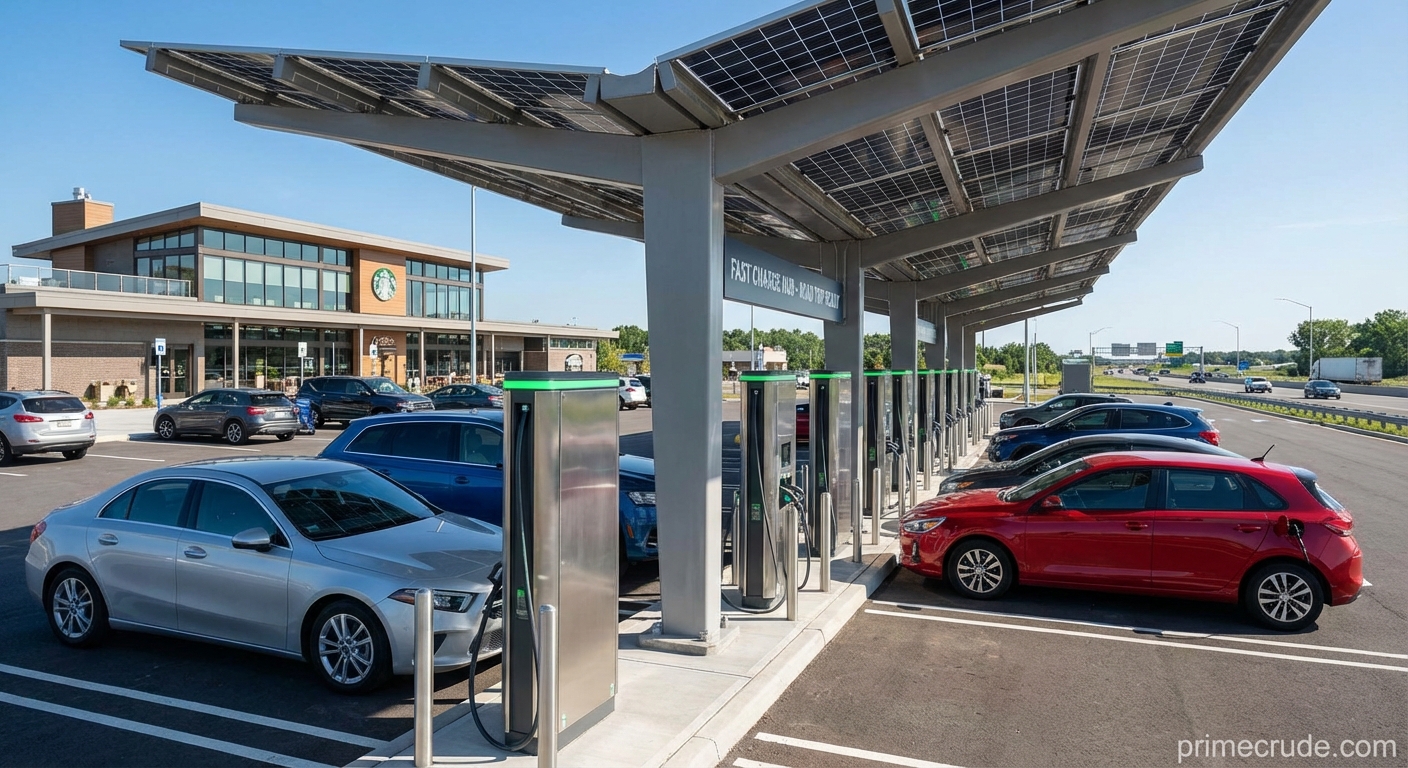
The dream of driving an electric vehicle coast-to-coast without range anxiety is becoming reality as billions of
federal and private dollars pour into building charging infrastructure along America’s highways. The Bipartisan
Infrastructure Law allocated $7.5 billion specifically for EV charging, with highway corridors prioritized to
eliminate the gaps that have made long-distance electric travel stressful. This isn’t just about adding outlets—it’s
about creating a network rivaling the convenience of gas stations that Americans have relied on for a century.
Understanding where this infrastructure is being built, how fast these chargers work, and what the network will look
like in 2030 helps prospective EV buyers evaluate whether electric vehicles finally make sense for their lifestyle.
The charging network Americans are building now will shape transportation for decades, determining whether electric
vehicles become universal or remain niche products for urban dwellers.
The Federal Charging Infrastructure Investment
The $7.5 billion federal investment in EV charging represents the largest public infrastructure commitment to
electric vehicles in American history. The program aims to build 500,000 public chargers by 2030, with particular
emphasis on DC fast chargers along highway corridors that enable long-distance travel.
The National Electric Vehicle Infrastructure (NEVI) program distributes funds to states based on formulas
considering highway miles and population. States must submit plans detailing where chargers will be installed,
ensuring coordination rather than haphazard development. The program prioritizes filling gaps in rural areas where
private investment has lagged.
State-by-State Implementation
Each state approaches NEVI implementation differently while meeting federal requirements. California, with the
largest EV adoption, focuses on expanding already-substantial networks. Texas is building extensive new
infrastructure across its vast highway system. Smaller states are ensuring basic coverage on key routes.
The federal program requires chargers every 50 miles along designated Alternative Fuel Corridors, with stations no
more than 1 mile from highway exits. These requirements ensure drivers always have charging options within
comfortable range regardless of their vehicle’s battery capacity.
Understanding Charging Speed Levels
Not all EV chargers are equal, and understanding the differences is essential for planning long trips. Charging
speed determines how long drivers must wait before continuing their journey.
Level 2 chargers, commonly found at hotels and shopping centers, add 12-30 miles of range per hour depending on the
vehicle. These work well for overnight charging but are impractical for highway travel where stopping four hours to
add 100 miles would be unacceptable.
DC Fast Charging Changes the Game
DC fast chargers (DCFC), also called Level 3 chargers, deliver much higher power directly to vehicle batteries,
bypassing onboard charging electronics. Modern DCFC stations provide 150-350 kilowatts, adding 100-200 miles of
range in 15-30 minutes—comparable to a meal or restroom break.
The NEVI program requires minimum 150 kW chargers with at least four ports per station. This ensures meaningful
charging speeds and reduces wait times when multiple vehicles need charging simultaneously.
| Charging Level | Power Output | Range Added per Hour | Typical Use Case |
|---|---|---|---|
| Level 1 (Standard Outlet) | 1.4 kW | 3-5 miles | Emergency/overnight at home |
| Level 2 | 7-19 kW | 12-30 miles | Home, workplace, destinations |
| DC Fast Charging | 50-350 kW | 100-200+ miles (in 20-30 min) | Highway travel, quick top-ups |
Current Highway Charging Networks
Private companies have built substantial highway charging networks without waiting for federal funding.
Understanding these existing networks helps EV drivers plan trips today.
Tesla’s Supercharger network remains the most extensive and reliable, with over 2,000 stations and 20,000+
connectors across North America. Superchargers provide consistent user experience with integrated payment and
navigation. Tesla has begun opening Superchargers to non-Tesla vehicles, dramatically expanding their utility.
Competing Networks
Electrify America operates over 800 stations primarily along highways, with chargers supporting all major non-Tesla
EVs. Funded initially by Volkswagen’s diesel emissions settlement, the network continues expanding with private
investment.
ChargePoint focuses on Level 2 chargers with growing DC fast charging presence. EVgo operates stations in
metropolitan areas with some highway coverage. Smaller networks and utility-operated stations add further options in
various regions.
Reliability Challenges
The Achilles heel of public EV charging has been reliability. Reports of broken chargers, payment system failures,
and offline stations have frustrated drivers and deterred potential EV buyers. A 2022 study found roughly 25% of
public chargers in some areas were non-functional.
NEVI requirements address reliability concerns by mandating 97% uptime standards. Chargers must remain operational
almost continuously, with rapid repair response when problems occur. Stations not meeting uptime requirements risk
losing federal funding.
Standardization Improvements
Connector standardization has simplified the charging experience. The Combined Charging System (CCS) connector has
become the North American standard for non-Tesla vehicles, and Tesla has adopted the NACS connector which the
industry is now embracing. This consolidation means drivers no longer need to worry about incompatible plugs.
Payment system standardization also improves. Credit card acceptance requirements mean drivers won’t need multiple
network memberships and apps. The experience is approaching gas station simplicity—swipe, charge, drive.
Strategic Location Selection
Where charging stations are built matters enormously for network utility. Federal guidelines ensure coverage along
designated corridors, but specific site selection determines the actual user experience.
Ideal locations provide amenities drivers can use during charging. Stations at travel plazas with restaurants,
restrooms, and convenience stores turn charging time into useful breaks. Locations in parking lots of major
retailers serve similar purposes.
Coverage Gaps
Rural areas present challenges for charging infrastructure. Lower traffic volumes make private investment less
attractive, yet these gaps prevent long-distance EV travel. Federal funding specifically targets filling rural gaps
that market forces wouldn’t address.
The 50-mile maximum spacing requirement ensures no highway segment lacks coverage. This may mean placing chargers in
locations that wouldn’t make commercial sense alone but are essential for network completeness.
The Driver Experience
Modern highway charging experiences have improved dramatically from early EV days. Drivers navigate to stations
using in-car systems or smartphone apps, with real-time availability information reducing uncertainty about finding
open chargers.
Arrival at a well-designed station is straightforward: pull into a charging bay, connect the cable, authenticate
payment via app or credit card, and begin charging. Most vehicles display charging progress, with estimated
completion time visible on phone apps.
Wait Times and Queuing
During peak travel periods, popular stations can develop queues. Chargers with only 2-4 stalls are most prone to
wait times during holidays or busy weekends. The NEVI four-port minimum helps address this, though truly busy
corridors need more capacity.
Some networks implement queuing systems that notify drivers when chargers become available. Others offer reservation
capabilities, though this can disadvantage travelers with less predictable schedules.
Grid and Power Supply Considerations
High-power charging stations require significant electrical infrastructure. A single station with eight 350 kW
chargers operating simultaneously needs 2.8 megawatts—enough to power over 1,000 homes. Building this capacity,
especially in rural areas far from substations, presents challenges.
Utilities must plan grid upgrades to support charging demand. New transformer installations, line upgrades, and
sometimes substation construction are necessary for high-power stations. These lead times affect how quickly
charging networks can expand.
On-Site Energy Storage
Battery storage at charging stations can reduce grid infrastructure requirements. Batteries charge slowly during
off-peak periods, then provide high power during charging sessions. This approach smooths demand and may reduce
utility costs.
On-site solar generation further reduces grid dependency. Covered charging canopies with solar panels can generate a
portion of station energy needs while providing shade for charging vehicles.
Comparing the Economics
Highway charging typically costs more per mile than home charging or gasoline in some markets. DC fast charging
prices range from $0.30-0.50 per kWh, translating to roughly $0.09-0.15 per mile for typical EVs. Gasoline at $3.50
per gallon costs $0.10-0.14 per mile for 25-35 MPG vehicles.
This pricing reality surprises some EV buyers who expected fuel savings during travel. However, the comparison
improves when considering that most EV charging occurs at home at $0.10-0.15 per kWh, and highway charging
represents a small fraction of most drivers’ consumption.
Subscription and Membership Programs
Charging networks offer subscription programs that reduce per-kWh costs for frequent users. Electrify America’s
Pass+ costs $4/month but reduces charging costs by roughly 25%. Tesla’s subscription options provide similar
savings.
For road warriors who charge frequently during travel, these subscriptions provide meaningful savings. For
occasional travelers, pay-as-you-go pricing remains more economical despite higher per-kWh rates.
Looking Ahead to 2030
By 2030, the American highway charging network should be dramatically more capable than today’s infrastructure. The
500,000 public charger target, combined with private investment, will create dense coverage along all major routes.
Charging speeds will continue increasing. 800-volt vehicle architectures already enable sub-20-minute charges for
significant range. By 2030, adding 200 miles in 10 minutes should be routine for new vehicles.
Integration with Autonomous Vehicles
Autonomous vehicle development creates unique charging considerations. Fleet vehicles operating continuously need
seamless charging integration. Robotic charging systems, inductive charging, and automated battery swapping are all
under development for autonomous applications.
The infrastructure being built today is designed with future flexibility in mind. Power capacity and standardized
connectors will serve vehicles not yet designed.
Conclusion
America’s $7 billion investment in highway EV charging infrastructure represents a generational commitment to
electric transportation. The network being built will eliminate range anxiety for most drivers, making electric
vehicles practical for the road trips Americans love.
Current gaps and reliability issues are being addressed through federal requirements mandating coverage density,
charging speeds, and uptime standards. Private investment complements public funding, with competitive dynamics
improving service quality.
For prospective EV buyers concerned about long-distance travel, the infrastructure landscape is transforming
rapidly. By 2027-2028, charging along major highways should be nearly as convenient as gas stations. The electric
future is being built, station by station, across America’s highway network.
The highway charging network being built now will determine whether electric vehicles become America’s
default transportation choice—every new station brings that future closer to reality.
About the Author