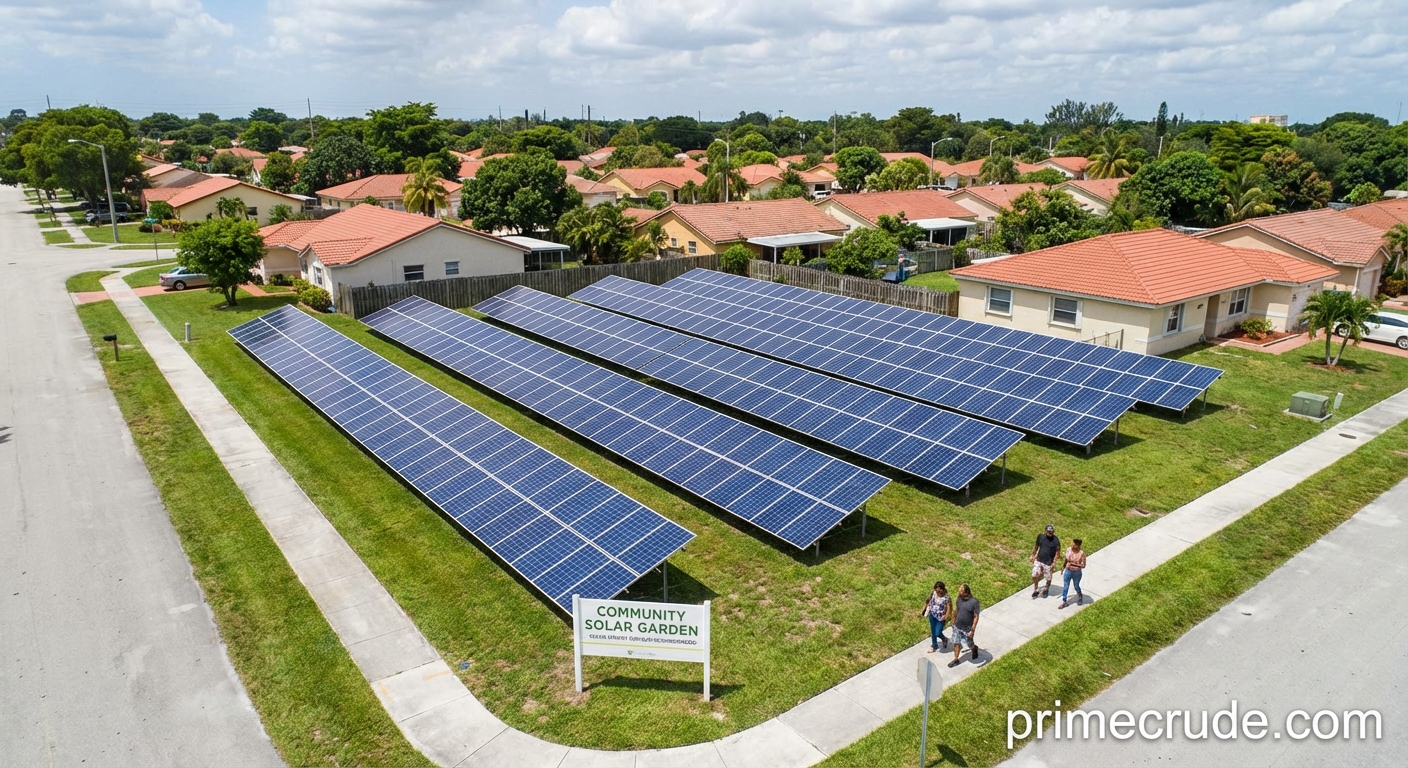
Not everyone can install solar panels. Renters can’t make permanent modifications to properties they don’t own.
Homeowners with shaded roofs, structural limitations, or HOA restrictions face similar barriers. Yet the desire for
clean, affordable electricity extends far beyond those with suitable rooftops. Community solar gardens—shared solar
installations that serve multiple subscribers—offer a solution, providing solar access to anyone within a utility
service area regardless of their housing situation. Participants subscribe to a portion of a larger solar array
located elsewhere, receiving credits on their electricity bills for their share of the power produced. This model is
expanding rapidly, opening solar benefits to millions previously excluded from the rooftop revolution. Understanding
how community solar works, what it costs, and how to evaluate programs helps determine whether this option makes
sense for your circumstances.
How Community Solar Works
Community solar projects are larger solar arrays—typically 1-5 megawatts—built on suitable land or large roof
structures. These projects generate electricity fed into the local utility grid. Subscribers receive credits for
their share of the power generated, reducing their electricity bills without installing anything at their homes.
The model works through a billing mechanism called “virtual net metering” or “bill crediting.” The solar project
meters its total generation, allocates credits to subscribers based on their subscription size, and utilities apply
those credits to subscriber bills. The electrons don’t go directly to your home, but you benefit financially as if
they did.
Subscription Structures
Community solar subscriptions typically come in two forms. Ownership models let subscribers purchase panels or
shares of a project, receiving credits for 20+ years based on their ownership stake. Subscription models require no
upfront payment but charge monthly fees or take a percentage of bill credits generated.
Most residential subscribers choose subscription models for their lower barriers to entry. No upfront investment
means no financial risk, and subscriptions can typically be cancelled with reasonable notice if circumstances
change.
Who Can Participate
Community solar eligibility varies by program but typically requires only that participants are customers of the
utility serving the project area. Renters, homeowners, and businesses can all participate. No property ownership or
roof suitability assessment is necessary.
This accessibility is community solar’s fundamental advantage. Roughly half of American households cannot host solar
systems due to renting, shading, roof conditions, or other limitations. Community solar serves this otherwise
excluded population.
Program Availability
Community solar availability depends on state policies and utility programs. States like Minnesota, New York,
Massachusetts, and Colorado have robust community solar markets with many project options. Other states lack
enabling policies, limiting or preventing community solar development.
Within states with community solar, specific programs may have geographic restrictions, income requirements for
subsidized offerings, or capacity limits. Checking local availability is the first step for interested participants.
| Feature | Rooftop Solar | Community Solar |
|---|---|---|
| Requires Property Ownership | Yes | No |
| Requires Suitable Roof | Yes | No |
| Upfront Investment | $15,000-30,000 (or financing) | None (subscription) or varies (ownership) |
| Installation Required | Yes (on-site) | No |
| Portable When Moving | No (stays with property) | Often (within utility area) |
| Typical Savings | 20-30% of bill | 5-15% of bill |
| Federal Tax Credit | Yes (30%) | No (for subscribers) |
Financial Benefits and Costs
Community solar participants typically save 5-15% on their electricity bills compared to grid-only power. The
savings are lower than rooftop solar because project developers take a share of benefits to cover costs and profits,
and subscribers don’t receive the federal tax credit that flows to project owners.
Subscription programs commonly offer savings of around $0.01-0.03 per kilowatt-hour below standard utility rates. A
household using 1,000 kWh monthly might save $10-30 per month. The savings compound over time and require no effort
after initial enrollment.
No Upfront Costs
Subscription-based community solar requires no upfront payment. This removes the largest barrier to solar
adoption—finding $20,000 or more for rooftop installation, or qualifying for financing. Subscribers begin saving
immediately without any capital outlay.
Ownership-based programs do require upfront investment, typically offering higher long-term returns in exchange.
These programs may appeal to those with capital seeking clean energy investments.
Low-Income Community Solar
Several states require or incentivize community solar programs serving low-income households. These programs often
offer enhanced savings—sometimes 20% or more—recognizing that lower-income households spend disproportionate shares
of income on energy.
Income-qualified programs may require proof of eligibility through SNAP, Medicaid, or other program participation.
Some programs use area-based eligibility for residents of designated low-income communities.
Environmental Justice Applications
Community solar projects sited in environmental justice communities can provide local benefits beyond subscriber
savings. Local jobs in construction and maintenance, reduction of urban heat islands from parking lot installations,
and community ownership opportunities all support broader goals.
Some programs prioritize serving communities historically burdened by pollution from fossil fuel facilities, helping
offset environmental injustices through clean energy access.
Finding and Evaluating Programs
Multiple resources help consumers find community solar options. EnergySage’s community solar marketplace lists
available programs by location. State energy offices often maintain program directories. Utility websites may link
to approved programs.
Evaluating programs requires understanding key terms: What percentage savings is guaranteed? Are there cancellation
fees? What happens if you move? Is the price locked for the subscription term? How long is the commitment?
Key Questions to Ask
Before subscribing, confirm the specific savings percentage or per-kWh discount. Understand whether the rate is
fixed for your subscription term or can change. Ask about the commitment period and cancellation terms. Verify what
happens if you relocate within or outside the utility service area.
Legitimate community solar programs don’t require payments for electricity you haven’t yet consumed. Be wary of
programs requiring large upfront payments or long-term commitments without clear cancellation provisions.
How Crediting Works
Understanding the bill credit mechanism helps evaluate program value. Your solar share generates credits based on
actual production, which varies seasonally. Summer months typically produce more than winter. Credits are applied to
your utility bill, reducing the amount you owe.
Most programs size subscriptions to cover 90-120% of your typical usage. Under-subscribing leaves savings on the
table; over-subscribing may generate credits that can’t be used (though many programs allow rolling credits forward
or cashing them out).
Net Crediting vs. Bill Replacement
Some community solar programs provide credits against your entire bill; others credit only the electricity portion,
leaving fixed utility charges intact. Understanding which model applies affects your actual savings.
Fixed charges—grid access fees, distribution charges, and similar non-consumption charges—typically can’t be offset
by generation credits. These charges continue regardless of solar participation.
Portability and Flexibility
Unlike rooftop solar that stays with the property when you move, community solar subscriptions are often portable
within the utility service area. Subscribers who relocate within the same utility territory can usually transfer
their subscription to the new address.
Moving outside the utility area typically requires subscription cancellation. Programs with reasonable cancellation
terms—typically 30-90 days notice without penalty—provide flexibility for mobile households.
Subscription Changes
Some programs allow adjusting subscription size as circumstances change. Adding an electric vehicle, experiencing
empty nest reduction in consumption, or other life changes may warrant resizing your solar share.
Review program terms regarding subscription modification before enrolling to ensure flexibility matches your
anticipated needs.
The Developer Perspective
Community solar projects are built by developers who finance, construct, and operate the arrays. Developers earn
returns by taking a portion of the bill credits generated, paying what remains to subscribers.
A healthy developer margin ensures projects get built and maintained properly. Extremely aggressive subscriber
savings claims may indicate unsustainable economics that could lead to project problems.
Program Quality Indicators
Established developers with track records of completed projects provide more confidence than newcomers. Projects
already operational eliminate construction risk. Review online ratings and complaints before subscribing.
Utility partnerships or state program certification can indicate program legitimacy. Some states maintain lists of
approved community solar providers meeting regulatory requirements.
Environmental Impact
Community solar delivers environmental benefits by generating clean electricity that displaces fossil fuel
generation. Each megawatt-hour of solar generation prevents roughly 0.4-0.9 tons of CO2 emissions depending on the
regional grid mix.
Subscribers can legitimately claim their share of environmental benefits. A subscription covering 10,000 kWh
annually prevents roughly 4-9 tons of CO2 emissions per year—comparable to driving reductions or other major
personal climate actions.
Additionality Considerations
Community solar projects typically wouldn’t be built without subscriber commitments. Your participation helps
finance new clean energy capacity rather than just purchasing credits from existing generation.
This additionality distinguishes community solar from some green energy products that may simply relabel existing
clean generation without supporting new development.
Future of Community Solar
Community solar is growing rapidly, with capacity doubling every few years. More states are adopting enabling
policies. The federal Inflation Reduction Act improved project economics through enhanced tax credits for projects
serving low-income communities.
Advancements may include virtual power plant applications where community solar combined with storage provides grid
services. Enhanced portability across utility boundaries could improve flexibility. Integration with other clean
energy programs could package community solar with EV charging or heat pump incentives.
Market Evolution
As the market matures, subscriber experience should improve. Better enrollment platforms, clearer terms, and more
competitive offerings should result from increased competition. Standards and certifications may help consumers
identify quality programs.
Expanded low-income programs, driven by equity-focused policies and federal incentives, will extend community solar
benefits to households most burdened by energy costs.
Conclusion
Community solar gardens provide a practical path to solar energy for the millions of Americans who cannot install
rooftop panels. Renters, apartment dwellers, owners of shaded properties, and others previously excluded can now
participate in clean energy generation while saving money on electricity bills.
The model works through shared projects where subscribers receive bill credits for their portion of generation. No
installation, no upfront investment, and often no long-term commitment make community solar accessible to nearly
anyone within participating utility areas.
Savings are typically more modest than rooftop solar—5-15% rather than 20-30%—but the elimination of barriers to
entry makes participation possible for far more households. As programs expand and markets mature, community solar
will likely become a mainstream option for clean energy access.
Community solar opens the door to clean energy for everyone—proof that you don’t need to own your roof to own
your power.
About the Author