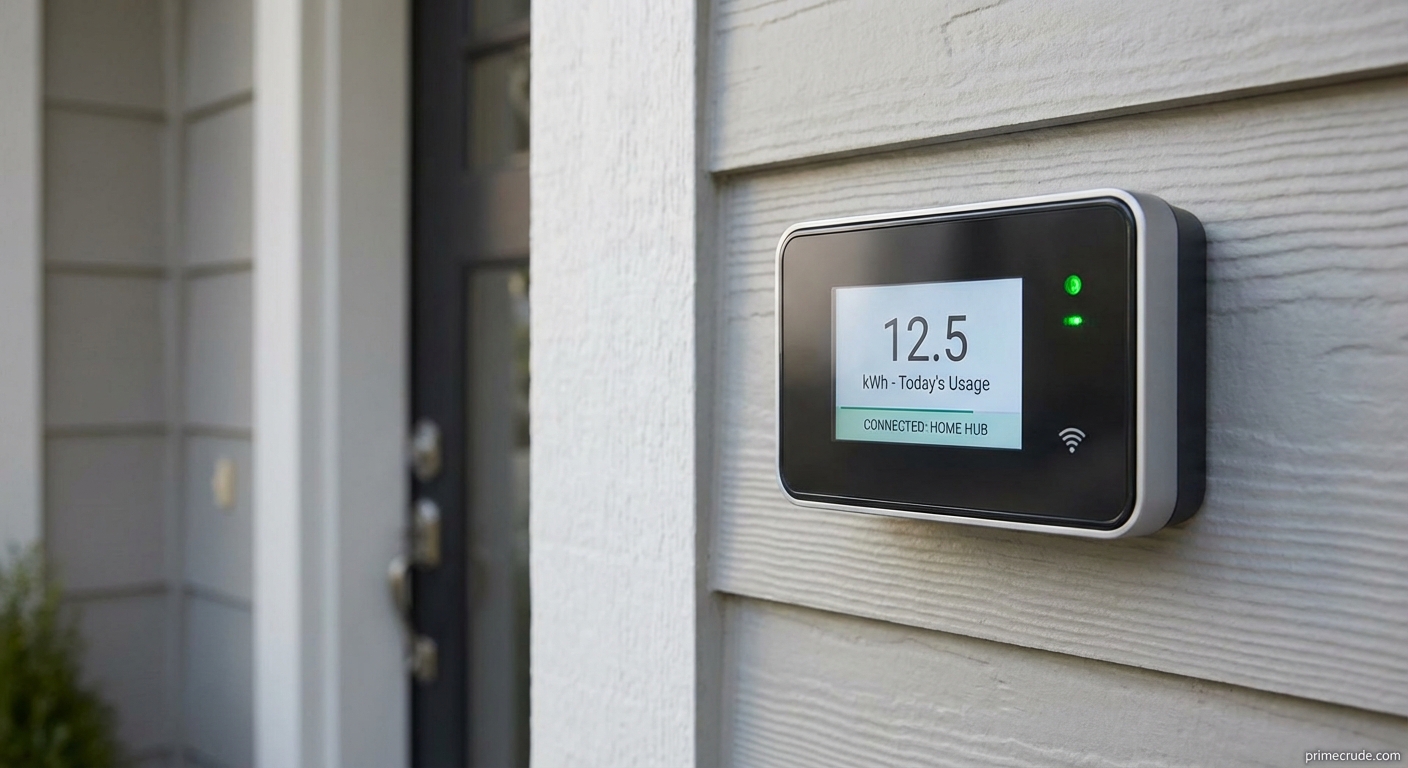
The humble electricity meter, unchanged for nearly a century, has undergone a quiet revolution. The spinning disk
meters that required utility workers to trudge through neighborhoods reading dials are disappearing, replaced by
digital smart meters that communicate wirelessly and track usage in remarkable detail. Over 100 million smart meters
now operate across American homes and businesses, transforming how utilities manage the grid and how consumers
understand their energy consumption. This digital upgrade raises important questions about privacy, cybersecurity,
and whether the benefits justify the billions invested in deployment. Understanding what smart meters do, what data
they collect, and how that information is used helps consumers make informed decisions about their energy use while
evaluating legitimate concerns about the technology spreading through their neighborhoods.
How Smart Meters Work
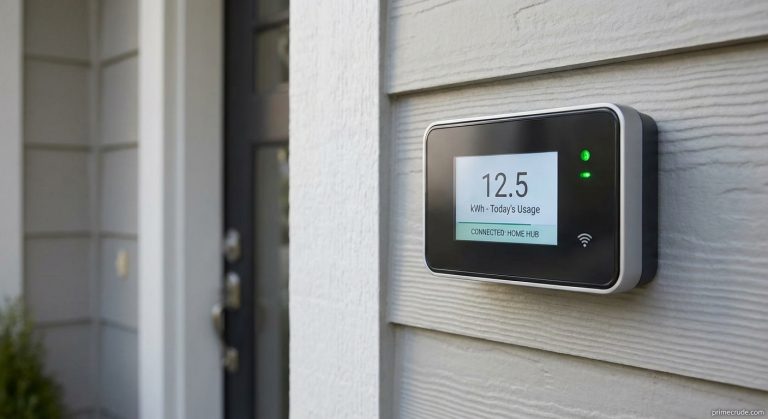
Smart meters measure electricity consumption just like traditional meters, but add two-way digital communication
capabilities. Instead of storing cumulative usage until a meter reader arrives, smart meters transmit readings
automatically to utilities through wireless networks.
Most smart meters record usage in intervals—typically every 15 minutes—rather than just monthly totals. This
granular data reveals when electricity is consumed, not just how much. The information enables time-of-use pricing,
demand management programs, and detailed consumption analysis.
Communication Technologies
Smart meters use various communication methods depending on utility network design. Radio frequency (RF) mesh
networks connect meters to each other and to utility collectors. Cellular connections provide direct communication
where mesh networks aren’t practical. Power line communication uses the electrical wires themselves to transmit
data.
Most utilities deploy Advanced Metering Infrastructure (AMI)—comprehensive systems connecting meters to utility
operations through multiple communication layers. This infrastructure enables not just meter reading but also outage
detection, voltage monitoring, and remote service connections.
Benefits for Utilities
Smart meters dramatically reduce utility operating costs. Eliminating monthly meter reading saves labor and vehicle
expenses. Remote connection and disconnection avoid truck rolls for service changes. Automated billing reduces
errors and processing costs.
Beyond operational savings, smart meters improve grid management. Real-time consumption data helps utilities balance
supply and demand. Voltage readings identify grid problems before they cause outages. Outage detection pinpoints
affected areas immediately rather than waiting for customer reports.
Theft Detection and Revenue Protection
Electricity theft costs utilities billions annually. Smart meters detect tampering, unusual usage patterns, and
discrepancies between metered and distributed power. These capabilities help utilities recover lost revenue and
allocate costs fairly among paying customers.
Meter accuracy also improves. Digital measurement is more precise than aging electromechanical disks. Utilities can
verify proper meter function remotely rather than through periodic manual testing.
Consumer Benefits
Smart meters provide consumers access to detailed usage information previously unavailable. Utility web portals and
apps display hourly or 15-minute consumption data, revealing when electricity use is highest and how behavior
changes affect bills.
This visibility helps consumers identify waste and savings opportunities. Running the dishwasher at midnight rather
than 6 PM might save money on time-of-use rates. Seeing that standby power draws 10% of household consumption
motivates unplugging unused devices.
Time-of-Use Rate Options
Smart meters enable time-of-use pricing that charges different rates based on when electricity is consumed. Peak
afternoon hours might cost $0.30 per kWh while overnight off-peak costs $0.10. Consumers who can shift usage save
money while reducing grid stress.
Not all consumers benefit from time-of-use rates. Households unable to shift consumption may pay more than under
flat rates. Understanding usage patterns before switching rate plans is essential.
| Feature | Traditional Meter | Smart Meter |
|---|---|---|
| Reading Frequency | Monthly (manual) | Every 15 minutes (automatic) |
| Billing Accuracy | Estimated if not read | Actual usage always |
| Outage Detection | Customer must report | Automatic notification |
| Usage Visibility | Monthly total only | Hourly/quarter-hourly data |
| Rate Options | Flat rates only | Time-of-use, demand rates |
| Remote Connect | Requires truck roll | Remote activation possible |
Privacy Considerations
Detailed usage data reveals information about household activities. Energy consumption patterns indicate when
residents are home, when they sleep, and even what appliances they use. This granularity raises legitimate privacy
concerns.
Researchers have demonstrated that 15-minute usage data can reveal television viewing habits, sleep patterns, and
occupancy status. While utilities generally have legitimate needs for this data, potential misuse or breach warrants
concern.
Data Protection Practices
Most utilities implement data protection policies limiting access to granular usage data. Regulations in many states
require customer consent before sharing data with third parties. Aggregated data for grid planning typically can’t
identify individual households.
Consumers should review their utility’s privacy policy and understand data sharing practices. Opting out of certain
data uses may be possible. Understanding what data exists and who can access it enables informed decisions.
Cybersecurity Concerns
Any networked device presents potential security vulnerabilities. Smart meters connected to utility systems could
theoretically be targeted by hackers seeking to disrupt grid operations or access customer data.
Utilities invest heavily in cybersecurity, implementing encryption, network segmentation, and intrusion detection.
National laboratories and industry working groups develop standards for meter security. However, no system is
impenetrable, and the consequences of successful attacks on grid infrastructure are serious.
Physical and Digital Security
Smart meters are designed with multiple security layers. Physical tamper detection alerts utilities to unauthorized
access. Encrypted communication prevents eavesdropping. Authentication requirements ensure only authorized systems
can issue commands.
Regular security updates address newly discovered vulnerabilities. Utilities must balance security patching against
operational disruption—mass firmware updates to millions of meters require careful management.
Health and RF Exposure Claims
Some consumers have expressed concerns about radio frequency emissions from smart meters. Smart meters transmit data
using radio frequencies similar to cell phones and WiFi routers. Do these emissions pose health risks?
Scientific consensus holds that smart meter RF exposure is far below levels that cause biological effects. The
California Council on Science and Technology, World Health Organization, and other bodies have concluded smart
meters pose no demonstrated health risk.
Comparing RF Exposures
Smart meters typically transmit for only a few minutes daily, often during off-peak hours. The brief transmission
duration and meters’ location outside homes result in extremely low cumulative exposure. Holding a cell phone to
your ear for one minute produces more RF exposure than a smart meter transmits all day.
Consumers with concerns can request meters be moved or shielded, though utilities may charge for non-standard
installations. Opt-out programs allowing traditional meters exist in some jurisdictions, typically with monthly fees
covering manual reading costs.
Smart Meters and Distributed Energy
The rise of rooftop solar, home batteries, and electric vehicles creates bi-directional energy flows that
traditional meters couldn’t track. Smart meters measure both consumption and export, enabling net metering programs
that credit solar generation.
Interval data helps utilities understand when distributed solar produces power and when batteries charge or
discharge. This information is essential for grid planning as distributed energy resources grow.
Demand Response Integration
Smart meters enable demand response programs where consumers receive incentives to reduce usage during peak periods.
Utilities can signal high-cost periods, and smart thermostats or other connected devices respond automatically.
These programs benefit both parties—consumers earn credits or reduced bills while utilities avoid expensive peak
generation. Smart meters provide the measurement and communication infrastructure making such programs possible.
Implementation Challenges
Deploying smart meters across millions of homes presents significant logistical challenges. Installers must access
every meter location, often requiring customer appointments. Legacy meters may need electrical upgrades for
compatibility.
Communication network reliability affects smart meter value. Meters in areas with poor connectivity may fail to
report data consistently. Network maintenance and upgrades add ongoing costs beyond initial deployment.
Customer Acceptance
Some customers resist smart meter installation, citing privacy, health, or general technology concerns. Mandates
requiring smart meter acceptance have faced legal challenges. Opt-out programs balance utility efficiency goals with
customer choice.
Effective customer communication reduces resistance. Explaining benefits, addressing concerns honestly, and
providing choice where feasible improves acceptance rates and public trust.
International Perspectives
Smart meter deployment varies globally. European Union directives require member states to roll out smart meters,
with most targeting 80% adoption by 2020. Actual deployment has lagged targets, with some countries achieving
near-universal coverage while others struggle.
Japan accelerated smart meter deployment following the 2011 earthquake and nuclear disaster, recognizing the need
for better demand management. China is installing smart meters at massive scale as part of grid modernization
efforts.
Lessons from Early Adopters
Countries with mature smart meter deployments provide insights for later adopters. Italy’s universal deployment
demonstrated operational savings. The Netherlands faced privacy concerns requiring policy adjustments. Australia’s
experience highlighted communication network challenges in remote areas.
These lessons inform best practices for technology selection, regulatory frameworks, and customer engagement.
Future Developments
Smart meter capabilities continue evolving. Next-generation meters may include additional sensors monitoring power
quality, voltage, and even non-electric utilities. Enhanced processing power could enable on-meter analytics.
Integration with smart home systems will deepen. Meters may communicate directly with home energy management
systems, enabling automated response to price signals and grid conditions without utility intervention.
Grid Modernization Context
Smart meters are one component of broader grid modernization. Advanced sensors, automated switches, and distributed
intelligence are transforming the grid from passive delivery infrastructure to an active network balancing diverse
resources.
This evolution toward a truly “smart grid” depends on the foundation smart meters provide—real-time visibility into
consumption patterns that enables sophisticated management of increasingly complex power systems.
Conclusion
Smart electricity meters represent a fundamental upgrade to century-old metering technology. Real-time usage
tracking, automated reading, and two-way communication enable efficiency improvements, new rate structures, and
integration with distributed energy resources.
Legitimate concerns about privacy, cybersecurity, and health merit attention, though evidence indicates properly
managed smart meter systems avoid significant risks. Consumer awareness of data practices and available choices
provides appropriate protection.
For most consumers, smart meters offer benefits through improved billing accuracy, usage visibility, and optional
rate programs. The technology enables the grid modernization necessary for a clean energy future while providing
immediate operational and consumer benefits.
Smart meters transform the humble electric gauge into a gateway connecting homes to the modern grid—enabling
efficiency, flexibility, and the information access that makes conscious energy consumption possible.
About the Author