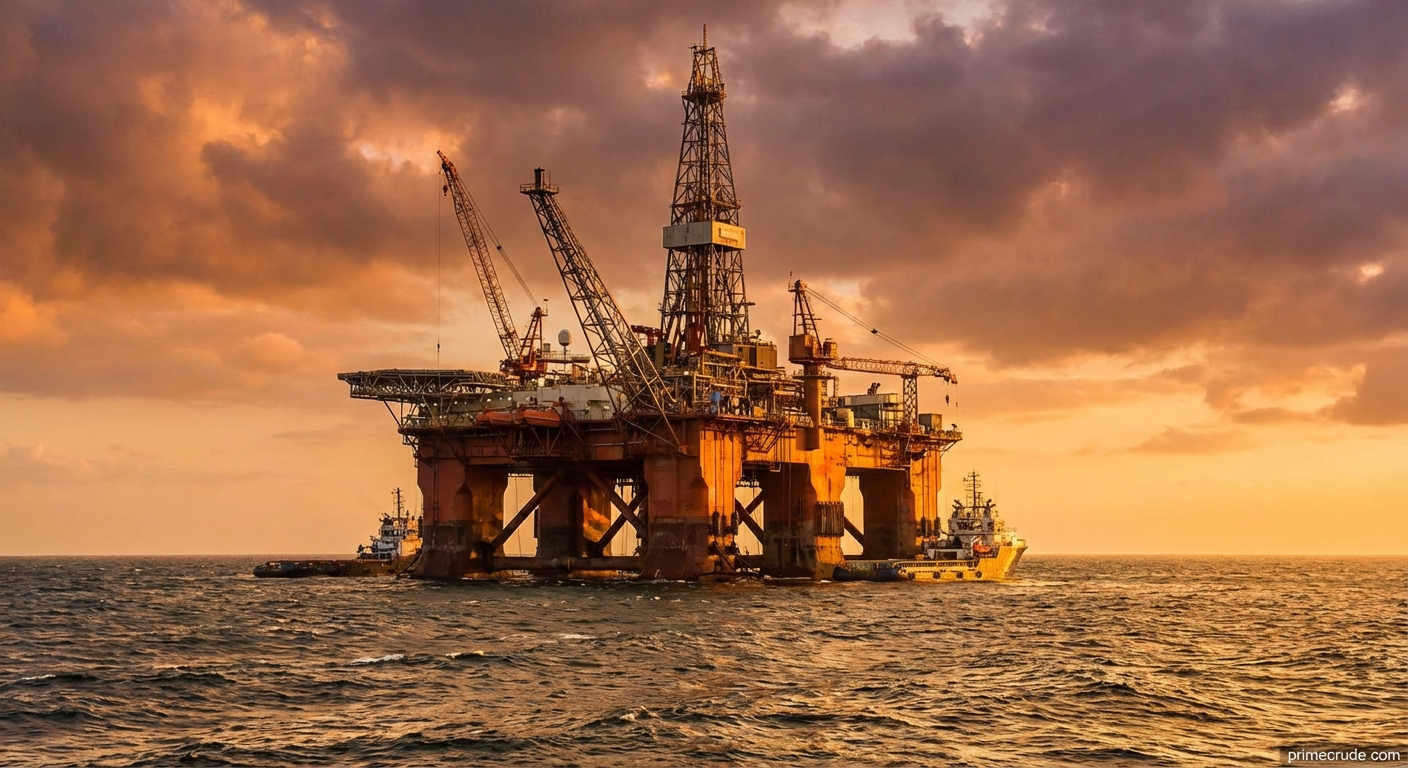
Standing miles offshore in water deeper than Mount Rainier is tall, modern drilling platforms represent some of
humanity’s most impressive engineering achievements. Extracting oil from beneath 10,000 feet of ocean water while
managing crushing pressures, near-freezing temperatures, and hostile conditions pushes technology to its absolute
limits. These deepwater operations now produce roughly one-third of global offshore oil output, making them
essential to the world’s energy supply. Understanding how these floating industrial cities function reveals an
extraordinary story of engineering innovation, calculated risk, and the relentless human drive to access energy
resources from increasingly challenging environments.
The Evolution of Deepwater Drilling
The journey to 10,000-foot depths progressed gradually over decades. Early offshore drilling in the 1940s and 1950s
took place in water depths measured in tens of feet, using platforms fixed directly to the seabed. As shallow-water
reserves depleted, the industry pushed progressively deeper, developing new technologies at each stage.
The first wells in water deeper than 1,000 feet were drilled in the 1970s, representing a significant leap in
capability. By the 1990s, depths exceeding 5,000 feet became routine in the Gulf of Mexico and offshore Brazil.
Today’s frontier extends beyond 12,000 feet, with some exploration programs targeting depths approaching three miles
of water.
Why Go So Deep?
The relentless push into deeper water reflects the industry’s need to replace depleting reserves. Shallow-water oil
fields discovered decades ago have entered decline, their production falling year after year. Meanwhile, geological
surveys have identified enormous oil deposits beneath deepwater basins worldwide. The Gulf of Mexico’s Lower
Tertiary formation alone may hold 15 billion barrels of recoverable oil, but accessing it requires drilling through
7,000 to 10,000 feet of water before even reaching the seabed.
Economic incentives justify the extraordinary investment. A single deepwater well can cost $200 million or more, but
successful discoveries often produce 50,000 to 200,000 barrels per day. One prolific well can generate billions of
dollars in revenue over its productive life, more than compensating for the development costs.
Platform Types for Ultra-Deepwater Operations
Fixed platforms bolted to the seabed, suitable for depths up to about 1,500 feet, cannot function in deeper water.
The structural requirements become impractical when platforms must stand thousands of feet tall. Instead, deepwater
operations use floating platforms held in position through sophisticated anchoring and dynamic positioning systems.
Semi-submersible platforms represent the workhorses of deepwater drilling. These structures float on massive
pontoons submerged below the wave zone, providing stability in heavy seas. Large columns connect the pontoons to the
deck above, creating a stable work platform even in hurricane conditions. Semi-submersibles can operate in virtually
unlimited water depths, constrained only by their mooring systems.
Drillships for Extreme Depths
Drillships look like oversized cargo vessels with a drilling rig mounted through their hull. A large opening called
a moon pool allows the drill string to pass through the ship’s center and into the water below. These vessels offer
greater mobility than semi-submersibles, repositioning between drilling locations under their own power.
Modern drillships feature dynamic positioning systems using multiple thrusters controlled by sophisticated
computers. GPS satellites and acoustic beacons on the seabed provide positioning information, allowing the ship to
maintain its exact location without anchors. This capability proves essential in ultra-deep water where conventional
mooring becomes impractical.
Tension Leg Platforms and Spars
For production operations requiring permanent installations, tension leg platforms (TLPs) and spar platforms offer
alternatives to semi-submersibles. TLPs use vertically tensioned cables called tendons to anchor the floating hull
to the seabed. These tendons, stretched tight under enormous tension, minimize vertical movement and allow for fixed
production risers.
Spar platforms feature long cylindrical hulls extending hundreds of feet below the water surface. This deep draft
provides stability while mooring lines hold position. The world’s deepest spar, operating in over 9,000 feet of
water in the Gulf of Mexico, demonstrates the technology’s capability in extreme conditions.
The Drilling Process in Extreme Depths
Drilling through 10,000 feet of water and then thousands more feet into the Earth’s crust requires managing
conditions that would seem impossible to early oilmen. The drill string, the series of connected pipes running from
the platform to the drill bit, might extend over 30,000 feet in total length. Controlling operations at such
distances tests both equipment and human capability.
The drilling process begins with establishing a connection between the floating platform and the seabed. A
large-diameter conductor pipe, typically 36 inches across, is driven or drilled into the ocean floor to provide
structural support for subsequent operations. On top of this conductor, operators install the blowout preventer
(BOP), the critical safety equipment that became infamous after the Deepwater Horizon disaster.
Riser Systems Connect Surface to Seabed
A marine riser, essentially a large pipe connecting the platform to the BOP on the seabed, allows circulation of
drilling fluid and provides a conduit for the drill string. In 10,000 feet of water, this riser must withstand
enormous forces from ocean currents, platform motion, and the weight of its own structure.
Riser joints connect together to form the complete string, with slip joints accommodating the platform’s vertical
motion in waves. Tensioning systems on the platform keep the riser under constant upward force, preventing buckling
and maintaining alignment. The engineering precision required to make these systems function reliably represents one
of deepwater drilling’s great achievements.
Managing Extreme Pressures
Pressure management defines deepwater drilling operations. At 10,000 feet of water depth, the seabed experiences
roughly 4,500 pounds per square inch (psi) of pressure from the water column above. The formations below the seabed
contain fluids at even higher pressures, sometimes exceeding 15,000 psi. Drilling must balance these pressures
precisely to maintain control.
Drilling fluid, commonly called mud, serves multiple purposes including pressure control. The column of mud in the
wellbore exerts hydrostatic pressure on the formations being drilled. Engineers carefully calibrate mud weight to
exceed formation pressure enough to prevent fluid influx while staying below the pressure that would fracture the
rock and cause fluid losses.
The Narrow Pressure Window Challenge
In deepwater environments, the margin between too little pressure and too much often shrinks dramatically. The
difference between formation pore pressure and fracture pressure, called the drilling window, might be only a few
hundred psi in challenging formations. This narrow window requires precise pressure control and sometimes limits the
depths that can be safely drilled.
Managed pressure drilling techniques help navigate tight pressure windows. These methods use rotating control
devices and specialized circulation systems to maintain precise bottomhole pressure regardless of operations being
performed. The technology has enabled successful drilling in formations that conventional methods couldn’t handle.
Blowout Prevention Systems
The blowout preventer stack sitting on the seabed represents the last line of defense against uncontrolled well
releases. These massive assemblies of rams, annular preventers, and shear mechanisms can seal the wellbore under
virtually any conditions. A single BOP stack for deepwater operations might weigh over 700,000 pounds and stand 50
feet tall.
Multiple redundant closing mechanisms ensure function even if primary systems fail. RAM preventers use large
hydraulic rams to pinch closed around the drill pipe or seal an open hole. Shear rams can cut through drill pipe and
seal the wellbore if all other options fail. Following the Deepwater Horizon incident, regulatory requirements added
additional redundancy and testing protocols.
Remote Operation and Emergency Systems
Operating a BOP 10,000 feet below the surface requires sophisticated control systems. Hydraulic lines and electrical
cables run down the riser, transmitting commands and power to the seabed equipment. Acoustic backup systems allow
triggering emergency functions even if the riser connection is lost.
Deadman and autoshear systems provide automatic protection if the rig loses power or disconnects unexpectedly. These
fail-safe mechanisms close the BOP without any human intervention, providing protection even in catastrophic
scenarios. Testing requirements ensure these backup systems function reliably when needed.
Subsea Production Systems
Once drilling confirms a commercial discovery, development moves to production infrastructure. In deepwater
environments, much of the production equipment relocates to the seabed rather than the surface. Subsea trees,
manifolds, and processing equipment can operate at depths that would make surface-piercing structures impractical.
Subsea trees, the valve assemblies that control flow from individual wells, sit directly on completed wellheads at
the ocean floor. These high-pressure systems manage production from reservoirs that might lie 20,000 feet below the
water surface. Remotely operated vehicles (ROVs) perform maintenance and intervention operations that workers handle
at the surface in shallow-water facilities.
Flowlines and Risers for Production
Produced oil and gas must travel from the seabed to surface facilities through production risers and flowlines.
Unlike drilling risers, production risers must handle high-pressure, high-temperature fluids over decades of
operation. The engineering requirements for these systems far exceed those for temporary drilling operations.
Flexible risers accommodate platform motion while maintaining integrity under demanding conditions. Steel catenary
risers hang in a gentle curve from the platform to the seabed, using the riser’s weight to absorb motion. Hybrid
systems combine elements of both approaches for specific applications.
Flow Assurance Challenges
The cold temperatures and high pressures of deepwater environments create conditions where produced fluids can cause
serious problems. Hydrates, ice-like crystalline structures containing natural gas molecules, can form in flowlines
and block production. Wax and asphaltene precipitation can similarly restrict or stop flow.
Preventing these problems requires careful system design and ongoing chemical treatment. Insulated flowlines
maintain fluid temperatures above critical thresholds. Chemical injection systems deliver hydrate inhibitors, wax
dispersants, and other treatments to keep production flowing. When blockages do occur, intervention operations to
clear them can cost millions of dollars and take weeks to complete.
Heating and Insulation Systems
Some deepwater developments incorporate active heating systems to maintain fluid temperature. Electrically heated
flowlines use resistive heating elements to warm the fluid stream during shutdowns or low-flow periods when normal
heat loss would cause problems. These systems add substantial cost and complexity but enable production that
wouldn’t otherwise be possible.
Multi-layer insulation systems wrap around flowlines to minimize heat loss to the surrounding seawater. The most
advanced systems incorporate multiple layers of specialized materials that provide thermal protection while
resisting the crushing pressures at depth.
The Human Element in Deepwater Operations
Despite the sophisticated technology, deepwater operations ultimately depend on highly skilled workers who spend
weeks at a time living on platforms far from shore. Typical rotation schedules put crews on the platform for two or
three weeks, followed by equal time off. Helicopter transport carries workers to and from shore, weather permitting.
Life on a deepwater platform combines industrial work with the isolation of being hundreds of miles from land.
Modern platforms provide comfortable accommodations, quality food, recreational facilities, and internet
connectivity. Nevertheless, the isolation and demanding work environment create challenges that companies must
actively manage.
Training and Safety Culture
The complexity of deepwater operations demands extensive training for all personnel. Drillers, roustabouts,
mechanics, and other technical workers undergo months of preparation before stepping foot on a deepwater rig.
Ongoing training ensures skills remain current as technology evolves.
Safety culture transformed following the Deepwater Horizon disaster. Stop-work authority, where any worker can halt
operations if they perceive unsafe conditions, became standard throughout the industry. Behavioral safety programs
encourage reporting of near-misses and hazard observations. These cultural changes have contributed to improved
safety statistics despite the inherently hazardous nature of the work.
Environmental Considerations and Protections
Deepwater environments host complex ecosystems that can be affected by drilling and production operations.
Cold-water corals, deep-sea fish species, and chemosynthetic communities living near natural seeps all face
potential impacts from industrial activities. Understanding and mitigating these risks has become increasingly
important for obtaining regulatory approval and maintaining public acceptance.
Baseline environmental surveys map sensitive habitats before development begins. Operators design facilities to
avoid particularly valuable areas and implement measures to minimize disturbance. Discharge restrictions limit what
can be released into the ocean, with most deepwater facilities achieving zero-discharge status for drilling and
production waste.
Oil Spill Response Capabilities
The Deepwater Horizon disaster demonstrated the consequences when deepwater blowout prevention fails. In response,
the industry developed new capabilities for capping uncontrolled wells at extreme depths. Capping stacks, subsea
dispersant equipment, and containment systems are now maintained in readiness for emergency deployment.
Well containment organizations established after 2010 maintain specialized equipment and expertise for responding to
deepwater incidents. These cooperatives allow costs to be shared across the industry while ensuring rapid response
capability. Regular drills test deployment procedures and identify areas for improvement.
Economic Realities of Deepwater Development
Developing a deepwater oil field requires investments measured in billions of dollars before any production revenue
arrives. A major project might take seven to ten years from discovery to first oil, with peak capital expenditure
occurring years before income begins. Only companies with substantial financial resources and technical capabilities
can undertake these projects.
The economics improve with larger discoveries. A field containing 500 million barrels can justify infrastructure
that wouldn’t make sense for 100 million barrels. This explains the industry’s focus on finding ever-larger
deepwater deposits and the disappointment when exploration wells encounter smaller-than-hoped accumulations.
Break-Even Costs and Project Viability
Break-even costs for deepwater projects vary widely depending on field size, water depth, well productivity, and
infrastructure requirements. Current generation projects typically require oil prices somewhere between $40 and $70
per barrel to generate acceptable returns. This range has declined substantially from earlier projects as technology
improvements and operational efficiency gains reduced development costs.
Companies continually work to push break-even costs lower. Standardized equipment designs, longer-reach wells that
access more reservoir from single platforms, and simplified processing facilities all contribute to improved
economics. These efforts help ensure deepwater development remains viable across a range of oil price scenarios.
Global Deepwater Production Centers
Deepwater production concentrates in several geographic areas with favorable geology and regulatory environments.
The Gulf of Mexico, offshore Brazil, and West Africa’s Golden Triangle account for the majority of current output.
Newer frontiers in Guyana, offshore East Africa, and elsewhere are adding to global deepwater production capacity.
The U.S. Gulf of Mexico pioneered ultra-deepwater development and remains a technology leader. Favorable geology,
mature infrastructure, and predictable permitting encourage continued investment despite competition from other
basins. Production from depths exceeding 5,000 feet now exceeds that from shallower Gulf waters.
Brazilian Pre-Salt Fields
Brazil’s pre-salt fields, located beneath thick salt layers in waters up to 10,000 feet deep, represent one of the
largest oil discoveries of the 21st century. Estimates suggest these fields contain over 50 billion barrels of
recoverable oil and gas. Production has grown rapidly, making Brazil one of the world’s leading deepwater producers.
The pre-salt formations presented unique technical challenges. Drilling through several thousand feet of salt
required specialized techniques and equipment. Nevertheless, the prolific wells and high-quality crude have rewarded
the investment, with some wells producing over 50,000 barrels per day from single completions.
The Future of Deepwater Technology
Technology development continues pushing the boundaries of what’s possible in deepwater environments. Automation
reduces the number of workers required on platforms while improving operational consistency. Subsea processing,
where separation and compression occur at the seabed rather than on surface facilities, is becoming increasingly
common.
Digital technologies are transforming how deepwater assets are operated. Remote operations centers allow specialists
onshore to monitor and control multiple offshore facilities. Predictive analytics identify potential equipment
failures before they occur, enabling proactive maintenance. These advances improve both safety and economics.
Unmanned and Reduced-Manning Concepts
Future deepwater facilities may operate with minimal or no personnel on board. Normally unmanned platforms, visited
periodically for maintenance, already operate in some regions. Advances in robotics, remote monitoring, and
artificial intelligence may eventually enable fully autonomous production operations, further reducing costs and
eliminating human exposure to offshore hazards.
The transition to lower-manning configurations proceeds gradually as regulators, operators, and labor stakeholders
work through the implications. Safety assurance for unmanned operations requires demonstrating that automated
systems can match or exceed human performance in responding to abnormal situations.
Conclusion
Extracting oil from beneath 10,000 feet of ocean water represents one of humanity’s most remarkable technological
achievements. The engineering systems required to drill and produce in these extreme environments have evolved over
decades, each generation building on lessons from previous projects. Today’s deepwater operations routinely
accomplish what seemed impossible just a generation ago.
The importance of deepwater production to global energy supply continues growing as conventional resources deplete.
While the energy transition may eventually reduce petroleum demand, the near-term and medium-term reality requires
continued development of deepwater resources to meet global needs. The technology and expertise developed for these
challenging environments represent valuable capabilities that will remain relevant for decades.
Understanding how deepwater operations function illuminates both the engineering ingenuity of the oil industry and
the extraordinary lengths humanity will go to secure energy resources. These floating industrial complexes,
operating far from shore in conditions that seem utterly hostile to human activity, demonstrate what’s possible when
sufficient motivation meets capable engineering.
Deepwater drilling stands as a testament to human ingenuity, pushing technological boundaries to access the
energy resources that power our modern world.
About the Author