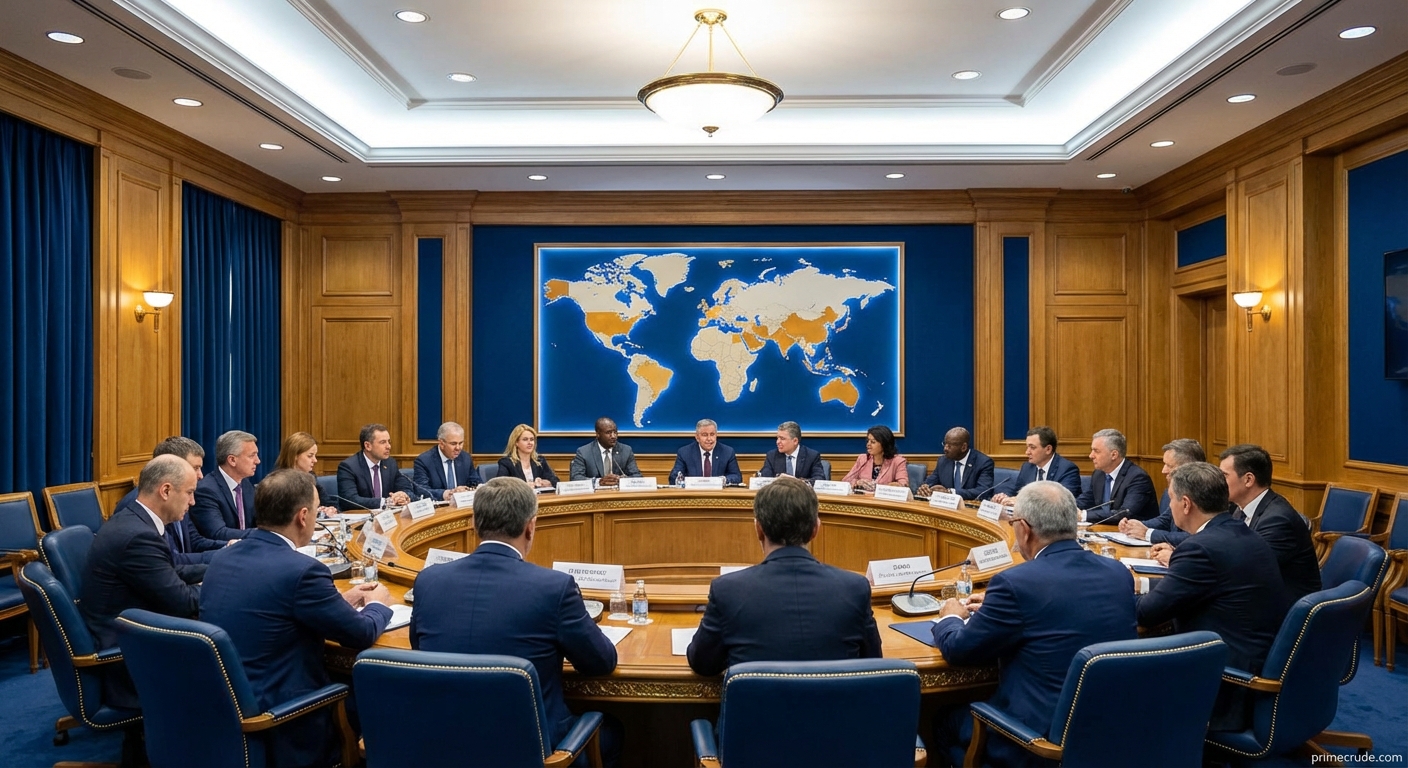
For over six decades, the Organization of the Petroleum Exporting Countries has wielded enormous influence over
global energy markets. Decisions made in Vienna, where OPEC maintains its headquarters, can send oil prices soaring
or crashing, reshape entire economies, and alter the balance of geopolitical power. While the organization makes
dozens of decisions each year, certain moments stand apart as genuine turning points that changed the trajectory of
global energy markets. These five decisions reshaped how nations approach energy security, transformed relationships
between producers and consumers, and created ripples still felt in 2026.
The Birth of Coordinated Production Policy: 1960 Formation
Before OPEC existed, multinational oil companies known as the “Seven Sisters” dominated global petroleum markets.
These companies set prices, controlled production, and extracted substantial profits while paying producing
countries relatively minor royalties. The creation of OPEC on September 14, 1960, represented the producing
countries’ determination to assert control over their most valuable natural resource.
Five founding members—Iran, Iraq, Kuwait, Saudi Arabia, and Venezuela—gathered in Baghdad to establish an
organization that would coordinate their petroleum policies. The immediate trigger was a unilateral price cut by oil
companies that reduced revenues to producing states. The longer-term goal was to gain a greater share of petroleum
wealth and a voice in market decisions.
Shifting Power Away from Companies
The formation itself didn’t immediately transform markets. Throughout the 1960s, oil companies continued dominating
the industry, and prices remained relatively stable at low levels. OPEC’s presence, however, provided a framework
for collective action when the moment arrived. Member countries gradually asserted greater control over concession
terms and tax rates.
The psychological impact mattered as much as the practical effects. Producing countries recognized that collective
action offered leverage that individual nations lacked. The success of OPEC inspired similar producer organizations
in other commodity markets, though none achieved comparable influence.
Legacy of the Formation Decision
The 1960 decision to create OPEC established a model for producer cooperation that persists today. Arguments about
OPEC’s effectiveness continue, but the organization’s existence ensures that producing countries have a permanent
forum for policy coordination. Every subsequent OPEC decision builds on that foundational choice to organize
collectively.
Critics argue OPEC functions as a cartel that artificially inflates prices to the detriment of consumers. Supporters
counter that the organization merely allows producers to obtain fair value for their depletable resources. This
debate, ongoing for sixty years, shows no sign of resolution.
The 1973 Oil Embargo: Weaponizing Petroleum
The October 1973 Arab oil embargo represents OPEC’s most dramatic intervention in global markets. Following U.S.
support for Israel during the Yom Kippur War, Arab OPEC members imposed an embargo on oil exports to the United
States and other nations perceived as supporting Israel. Simultaneously, OPEC raised posted prices by 70% and then
doubled them again within months.
The impact was immediate and devastating. Gasoline lines stretched for blocks in the United States. Industrial
production dropped as energy costs soared. The global economy plunged into recession. Oil prices quadrupled from
roughly $3 per barrel to over $12, fundamentally altering economic relationships between producers and consumers.
Consumer Nations Respond
The embargo shocked consuming nations into action. The United States created the Strategic Petroleum Reserve to
buffer against future supply disruptions. The International Energy Agency was established to coordinate consumer
country responses. Japan and European nations launched aggressive energy efficiency programs that permanently
reduced their oil intensity.
Conservation measures adopted in response to the 1973 crisis delivered lasting benefits. Vehicle fuel economy
standards, building insulation requirements, and industrial efficiency improvements reduced energy demand growth for
decades. These policies also accelerated development of non-OPEC oil supplies as higher prices made previously
uneconomic resources attractive.
The End of Cheap Oil
Perhaps the embargo’s most lasting impact was psychological. Before 1973, Western economies treated cheap, abundant
oil as a birthright. After the crisis, energy security became a permanent concern of national policy. The assumption
that oil would always be available at low prices was permanently shattered.
The 1973 experience also demonstrated petroleum’s potential as a geopolitical weapon. While the direct embargo
lasted only months, the memory influenced international relations for decades. Reducing dependence on Middle Eastern
oil became a strategic imperative for the United States and allied nations.
The 1986 Price War: Saudi Arabia Defends Market Share
Throughout the early 1980s, Saudi Arabia functioned as OPEC’s “swing producer,” adjusting its output to maintain
target prices as other members cheated on their quotas. By 1985, Saudi production had fallen from over 10 million
barrels per day to less than 3 million, while other OPEC members and new non-OPEC producers maintained or increased
output. The Kingdom finally concluded that its strategy was unsustainable.
In late 1985, Saudi Arabia abandoned its swing producer role and increased production dramatically. The resulting
supply surge crashed oil prices from nearly $30 per barrel to below $10 by early 1986. This deliberate market
destruction punished quota cheaters within OPEC and non-OPEC producers who had expanded while the Kingdom restrained
output.
Casualties of the Price Collapse
The 1986 price crash devastated high-cost producers worldwide. The U.S. oil industry experienced massive layoffs as
drilling collapsed. The Soviet Union, already struggling economically, lost the hard currency earnings that oil
exports provided. Venezuela and Nigeria faced severe fiscal crises as revenues plummeted.
Within OPEC, the price war demonstrated Saudi Arabia’s unique market power. Other members could cheat on quotas, but
only the Kingdom had the capacity and financial reserves to flood the market and enforce discipline. This reality
underpins OPEC dynamics to the present day.
Lessons from the Price War
The 1986 decision established principles that continue guiding OPEC strategy. Price crashes that result from
discipline breakdowns can hurt everyone, including those who triggered the breakdown. Saudi Arabia’s willingness to
use its market power gives its preferences outsized weight in OPEC deliberations. Consumers benefit from producer
disagreements but cannot rely on them.
The experience also shaped thinking about oil price floors. Prices below $15-20 per barrel proved unsustainable as
investment collapsed and production declined. This understanding influenced subsequent OPEC responses to price
weakness, generally favoring production cuts over prolonged price wars.
The 2014-2016 Decision Not to Cut: Shale Confrontation
When oil prices began sliding in mid-2014, market participants expected OPEC to respond with production cuts as it
had in previous downturns. Instead, at the November 2014 meeting, Saudi Arabia and its allies within OPEC chose to
maintain production despite crashing prices. This decision to “let the market decide” initiated a two-year period of
low prices that reshaped the global oil industry.
The target was clear: U.S. shale oil production had grown explosively, adding millions of barrels daily to global
supply. OPEC members believed that low prices would crush the upstart shale industry, forcing high-cost producers
out of the market. Prices that had exceeded $100 per barrel fell below $30 by early 2016.
The Shale Industry’s Response
Initial results seemed to validate the strategy. U.S. rig counts collapsed by over 75%. Shale companies filed for
bankruptcy in waves. Production growth stalled and then reversed. OPEC appeared to be winning the war of attrition
against its American competitors.
But the shale industry proved more resilient than OPEC expected. Surviving companies dramatically reduced their
costs. Drilling techniques improved efficiency. By 2017, shale production was growing again despite prices that
remained far below 2014 levels. The industry had learned to thrive at prices that should have been fatal.
A Strategic Miscalculation
With hindsight, the decision not to cut appears as a strategic miscalculation. OPEC members surrendered hundreds of
billions of dollars in revenue during the price war without eliminating shale competition. The U.S. industry emerged
leaner and more efficient, better able to compete in future downturns. OPEC eventually reversed course in late 2016,
agreeing to production cuts that should have come earlier.
The episode demonstrated shale’s remarkable adaptability. Unlike conventional megaprojects requiring decade-long
development timelines, shale production can adjust quickly to price signals. This flexibility makes shale a
persistent competitor that OPEC cannot simply eliminate through price wars.
The 2020 OPEC+ Mega-Cut: Pandemic Response
When COVID-19 lockdowns cratered global oil demand in early 2020, OPEC faced its most severe crisis since the
organization’s founding. Demand fell by over 20 million barrels per day in April 2020, vastly exceeding any previous
demand shock. Storage facilities filled rapidly, with some crudes briefly trading at negative prices as sellers paid
buyers to take oil they couldn’t store.
After a brief but damaging price war with Russia in March 2020, OPEC and its allies agreed to historic production
cuts totaling nearly 10 million barrels per day. This unprecedented reduction, equivalent to 10% of pre-pandemic
global production, represented the largest coordinated supply adjustment in petroleum history.
Implementation and Compliance
Unlike previous agreements plagued by cheating, the 2020 cuts achieved remarkably high compliance. Members who
historically exceeded quotas largely adhered to their commitments. The severity of the crisis apparently focused
minds on collective survival rather than individual gain.
Even non-OPEC producers contributed. The United States, while not formally part of the agreement, saw production
decline by 2-3 million barrels per day as low prices forced shut-ins and curtailed drilling. Brazil, Norway, and
other producers also reduced output, helping rebalance the market.
Gradual Unwinding and Price Recovery
The OPEC+ group managed the subsequent recovery with notable discipline. Rather than releasing all restrained
production immediately as demand recovered, the group tapered cuts gradually through 2021 and 2022. This measured
approach supported prices through the recovery period, allowing members to maximize revenues from their returning
production.
By 2022, oil prices had recovered to pre-pandemic levels and beyond. The 2020 decision demonstrated that OPEC+ could
respond effectively to extreme crises and maintain discipline during implementation. This success enhanced the
group’s credibility and influenced subsequent market expectations.
Common Threads Across Decades
Examining these five decisions reveals consistent patterns in OPEC decision-making. The organization responds to
perceived threats, whether from consuming nation policies, competitive producers, or demand shocks. Saudi Arabia’s
preferences typically prevail on major decisions given the Kingdom’s unique market position. Unity within the group
ebbs and flows but tends to strengthen during crises.
The decisions also illustrate OPEC’s learning process. The 1986 price war taught lessons about the pain of market
flooding. The failed 2014-2016 attempt to crush shale demonstrated limits to OPEC’s market power. The 2020 pandemic
response incorporated lessons from previous experiences, resulting in more effective action.
Winners and Losers from Major Decisions
Each major OPEC decision creates winners and losers. The 1973 embargo transferred wealth from consuming to producing
nations. The 1986 price war hurt everyone before eventually restoring market stability. The 2020 cuts benefited
those with production restraint capacity while disadvantaging producers unable to participate.
Consuming nations fare differently depending on their economic structure. Oil importers suffer when prices rise
sharply but benefit when they fall. Countries with domestically produced supply experience mixed effects, with
consumer gains offsetting producer losses or vice versa.
OPEC’s Future Influence
OPEC’s influence on global energy markets faces challenges from multiple directions. The energy transition, if it
proceeds as climate policies intend, will gradually reduce petroleum demand. Growing non-OPEC production limits the
organization’s market share. Geopolitical fragmentation complicates coordination among diverse member states.
Nevertheless, OPEC will likely remain influential for decades to come. The organization’s members control over 75%
of global proved oil reserves and roughly 35% of current production. Even in scenarios of declining demand, OPEC’s
low-cost resources will be among the last barrels the world stops consuming.
The OPEC+ Evolution
The expansion to OPEC+ through formal cooperation with Russia and other non-OPEC producers represents an
organizational evolution. This broader coalition controls over half of global production, giving it substantial
market influence when united. Managing an expanded membership with diverse interests presents challenges, but the
2020 experience suggests effective cooperation is achievable.
Future OPEC decisions will continue shaping energy markets, even as those markets evolve. The decisions examined
here created lasting impacts that researchers and market participants study decades later. Future turning points
will emerge as global energy systems navigate the transition away from fossil fuel dominance.
Implications for Consumers and Markets
What do these historical episodes mean for ordinary energy consumers and market participants today? First, they
demonstrate that oil prices can move dramatically based on producer decisions, sometimes with little warning.
Building flexibility into energy planning helps manage this volatility.
Second, the history suggests that extreme price situations tend not to persist indefinitely. Very high prices
stimulate conservation, alternative development, and additional production that eventually bring markets back toward
balance. Very low prices cause investment cutbacks that eventually tighten supply. Mean reversion forces operate
over medium-term horizons.
Watching for the Next Turning Point
Anticipating the next major OPEC decision that reshapes markets is essentially impossible. The decisions reviewed
here were generally not predicted in advance. Market participants can watch for conditions that historically
preceded major shifts: severe supply-demand imbalances, breakdowns in producer discipline, or external shocks like
the pandemic.
Following OPEC deliberations and statements provides useful insight into producer thinking. While the organization’s
public communications can be misleading, patterns over time reveal genuine priorities and likely responses to
various scenarios.
Conclusion
OPEC’s most consequential decisions have reshaped global energy markets in ways that persisted for decades. From its
founding in 1960 through the pandemic response of 2020, the organization has repeatedly demonstrated its ability to
influence prices, production, and the broader trajectory of the petroleum industry. These five decisions
particularly stand out for their lasting impact on energy security thinking, producer-consumer relationships, and
market dynamics.
The history shows an organization that has learned and adapted over time. Early decisions sometimes produced
unintended consequences that later choices sought to avoid. The expansion to OPEC+ reflects recognition that modern
markets require broader producer coordination. Future decisions will build on this accumulated experience.
For those seeking to understand global energy markets, OPEC’s decision-making history provides essential context.
The organization’s past choices continue influencing present conditions, and its future decisions will help
determine the trajectory of energy markets through the transition period ahead.
OPEC’s most significant decisions remind us that petroleum markets are not purely technical systems but
reflect geopolitical realities, national interests, and collective choices that shape the global
economy.
About the Author